The medical information in this article was written by Yasir Gozu, MD (General Surgery Specialist) and checked against current medical sources.
This article is for information purposes only; it is not a substitute for an examination and a physician’s assessment.
Hemorrhoids occur when the vascular cushions we are all born with in the anal canal enlarge under pressure and start causing symptoms. The most common causes are straining due to constipation, sitting too long on the toilet, inactivity, and pregnancy. In the early grades they can be reversed with lifestyle changes; in advanced grades the lasting solution is a procedure; in suitable cases, incision-free laser treatment done as day surgery. Always take bleeding seriously.
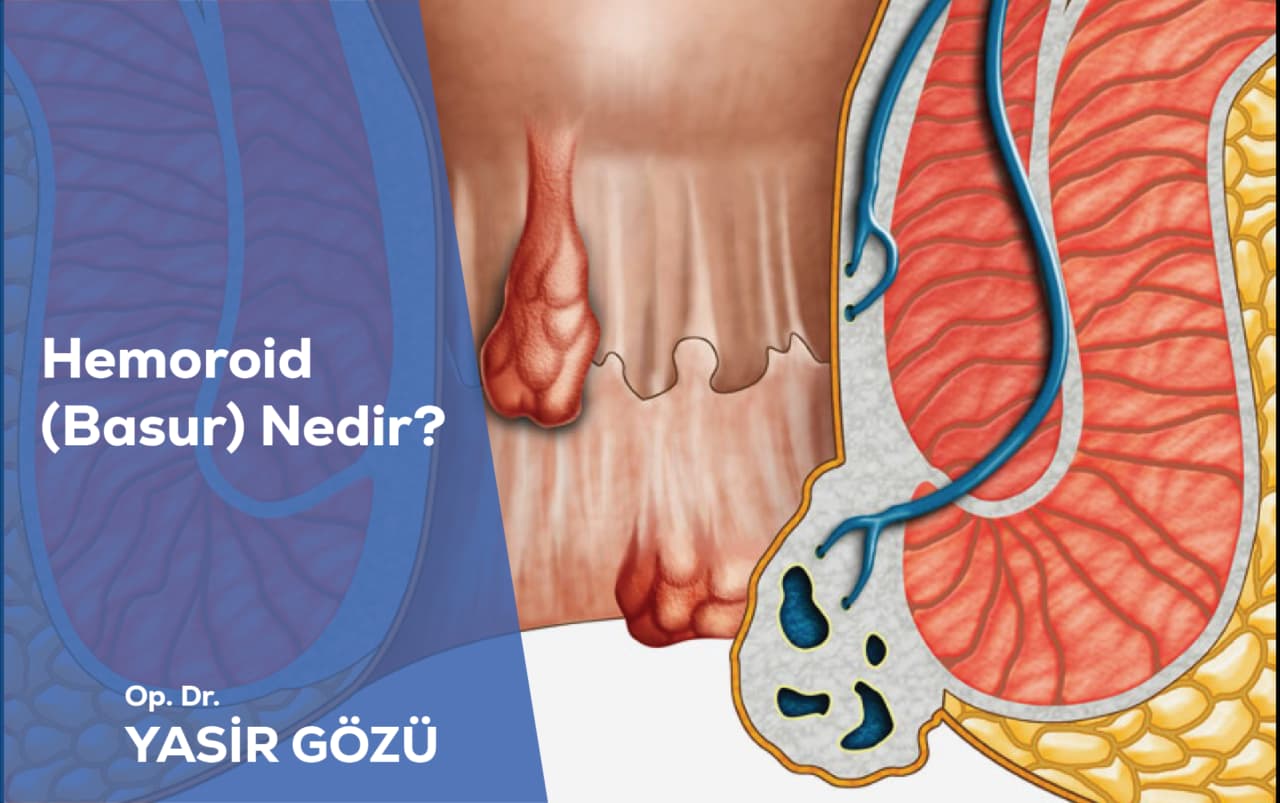
When I explain hemorrhoids to my patients, I always start with the same sentence, because it dissolves the shame in most of their minds in one stroke: "You have hemorrhoidal tissue, and so do I; we all do." The vascular cushions inside the anal canal that gently seal it and help control gas and stool are standard equipment for every one of us. What we call the disease is not these cushions themselves, but their enlarging and prolapsing under pressure over the years, until they begin to bleed, protrude, and cause discomfort.
This perspective matters, because it also defines the logic of treatment: our goal is not to "destroy an enemy" but to return an overgrown tissue to its proper place and function.
What causes hemorrhoids?
In a word: pressure. The biggest source of this pressure is straining due to constipation, followed by long minutes spent on the toilet with a phone, uninterrupted hours of sitting at a desk, heavy lifting, pregnancy, and childbirth. There is also a familial tendency; we see hemorrhoids more often in people whose parents had them. And then there are less obvious pressure sources such as chronic diarrhea and chronic cough... The common denominator is always the same: the load placed on the cushions. These pressures show up differently across life stages; see the specific triggers in men and in children.
Internal or external? The difference in two minutes
The cushions sit both inside the canal (internal hemorrhoids) and at its exit, under the skin (external hemorrhoids). Internal hemorrhoids are typically painless but bleed; as they progress, they prolapse outward. External hemorrhoids can be felt as a lump; if a clot forms inside, they turn into a purple, hard, and very painful swelling. The two frequently occur together. You can find a detailed comparison in this article and the management of external swelling here.
Grades: The staircase of the disease
We track internal hemorrhoids on four steps. Grade 1: not visible from outside, bleeds occasionally. Grade 2: prolapses with straining, retracts on its own. Grade 3: prolapses and only goes back when pushed in by hand. Grade 4: permanently outside. This staircase is the compass of our treatment choices; on the first two steps, lifestyle changes and simple measures are usually enough; from the third step onward, procedural options come into play.
Symptoms and the one critical warning
Bright red bleeding with bowel movements, itching and a feeling of moisture, a palpable lump, and prolapse; that is the classic quartet, and I covered each one in the symptoms article. My single, non-negotiable warning here is this: never dismiss bleeding as "just hemorrhoids" without an examination. Hemorrhoids are not the only disease that bleeds; especially after age 40, the first episode of bleeding must be checked once. If the examination shows hemorrhoids, no problem; but let's not say so without looking.
How do they go away? A realistic treatment path
The path has three stops. First stop; lifestyle: 25-30 grams of fiber a day, 2 liters of water, no more than 5 minutes on the toilet, breaking up long sitting spells, warm sitz baths. In the early grades, this alone silences the complaints in most patients; the full protocol is in the home treatment article. Second stop; creams and suppositories: short-term support during flare-ups; those containing cortisone should not be used for more than a week. Creams do not "cure"; they relieve; knowing the difference matters. Third stop; a procedural solution: when the grade has advanced or the complaints are disrupting your life. Today, the first choice in most cases is laser: no incision, no stitches, day surgery. All the options are on the treatment page.
Frequently asked questions
Do hemorrhoids go away on their own?
Early-grade complaints can genuinely settle once you change the habits that trigger them, and stay quiet for years. A structurally enlarged, advanced-grade cushion, however, does not return to its former state on its own.
Do hemorrhoids turn into cancer?
No; hemorrhoids do not turn into cancer. The real issue is different: cancer can also bleed and be mistaken for hemorrhoids. That is why bleeding must be clarified with an examination at least once.
Are piles and hemorrhoids the same thing?
Yes; piles is the everyday name, hemorrhoids the medical one. The "lump" people describe is the enlarged cushion itself.
Which doctor should I see?
A general surgeon; ideally one who focuses heavily on anorectal diseases (proctology). The examination takes a few minutes and requires no preparation.
References
- American Society of Colon and Rectal Surgeons (ASCRS) — Clinical Practice Guidelines for Hemorrhoids, fascrs.org
- NHS — Piles (Haemorrhoids), nhs.uk
- Turkish Society of Colon and Rectal Surgery, tkrcd.org.tr
Let's determine your grade and the right stop for you together: 444 8 623 — Op. Dr. Yasir Gözü.
Yasir Gozu, MD
General Surgery Specialist
He has worked in anorectal diseases (proctology) for over twenty years, focusing on non-surgical laser treatments for hemorrhoids, anal fistula, anal fissure and pilonidal sinus. He sees patients at Avrupa Cerrahi in Besiktas Levent.
Content owner: Yasir Gozu, MD
Published: May 2, 2026
Last updated: September 8, 2026