The medical information in this article was written by Yasir Gozu, MD (General Surgery Specialist) and checked against current medical sources.
This article is for information purposes only; it is not a substitute for an examination and a physician’s assessment.
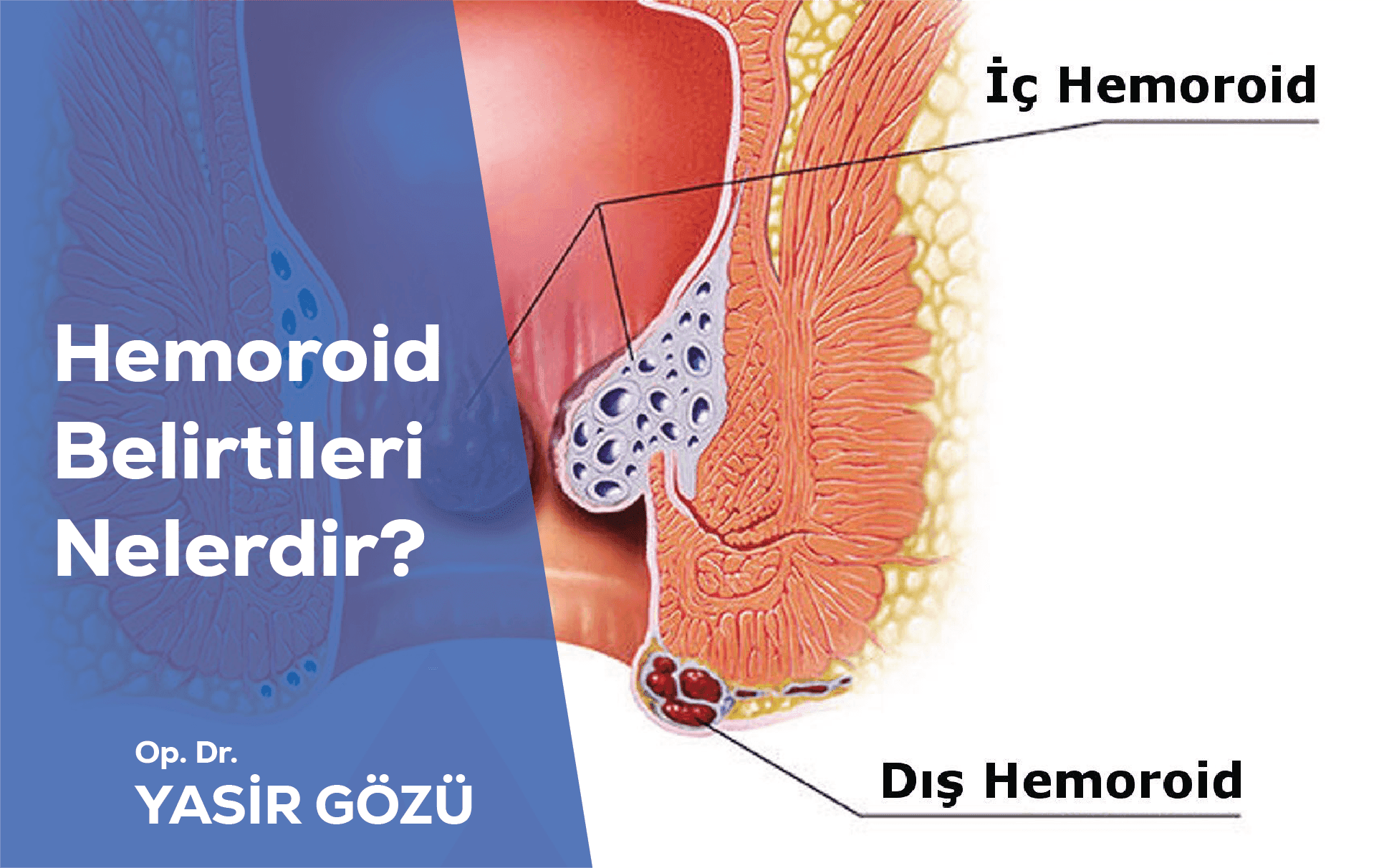
The four classic symptoms of hemorrhoids: bright red bleeding with bowel movements, itching and moisture, a palpable lump, and a sensation of prolapse. Internal hemorrhoids bleed painlessly; external hemorrhoids form a painful lump. Severe pain more often signals a fissure, foul-smelling discharge a fistula, and dark-colored bleeding the upper bowel. The first episode of bleeding requires an examination: especially after age 40.
Hemorrhoids almost always introduce themselves the same way: a bright red mark on the toilet paper. I know the small panic of that moment; my patients describe it as "my world came crashing down." Let me reassure you first: hemorrhoids are by far the most common cause of anal bleeding, and the easiest one to treat. But I always add the second half of that sentence too: being the most common cause does not mean being the only cause. This article will help you decode the language of the symptoms.
The four classic symptoms
1. Bright red bleeding
Hemorrhoidal bleeding is fresh: on the surface of the stool, on the paper, or dripping into the bowl, bright red. Its painlessness is typical; the area where internal hemorrhoids sit has few pain nerves. If the blood is dark, tarry, or mixed into the stool, the story changes; that is a sign of bleeding from higher up and must always be investigated.
2. Itching and moisture
Enlarged cushions prevent the canal from closing completely; the leaking mucus irritates the skin. Constant dampness, itching, marks on the underwear... This is what patients describe as "never feeling clean," and it calls for treating the cause, not a cream.
3. A palpable lump
This is the signature of an external hemorrhoid. If it is soft and mildly tender, it is a dilated vessel; if it appears suddenly and is purple, hard, and very painful, it is a thrombosed (clotted) hemorrhoid; in that situation, remember the 72-hour window.
4. A sensation of prolapse
This shows an internal hemorrhoid has climbed a grade: first it comes out with straining and goes back on its own (grade 2), then it must be pushed back by hand (grade 3), and finally it stays out permanently (grade 4). The sentence "something stays outside after the toilet" whispers the grade to us at the examination.
The picture by grade
| Grade | Typical symptom | What to do? |
|---|---|---|
| 1 | Occasional painless bleeding | Lifestyle changes and one examination |
| 2 | Bleeding and prolapse with straining that retracts on its own | Home protocol; assessment if it does not improve |
| 3 | Prolapse pushed back by hand, moisture, itching | Procedural options should be discussed |
| 4 | A lump permanently outside, feeling of soiling | Treatment plan without delay |
This symptom may NOT be hemorrhoids
The language of symptoms has three important exceptions. Knife-like pain during bowel movements and a little blood on the paper: this pair points to an anal fissure rather than hemorrhoids. Foul-smelling, purulent discharge: that is the language of a fistula, not hemorrhoids. Dark bleeding, a change in bowel habits, weight loss, fatigue: these are signals from "upstairs" and are clarified with a colonoscopy. I compared the conditions confused with hemorrhoids in a separate article.
When to see a doctor?
A clear list: if you have seen bleeding for the first time (once at any age, and definitely if you are over 40), if the bleeding keeps recurring, if a painful hard lump has formed, if the prolapse now needs to be pushed back by hand, and if itching and moisture are eroding your quality of life. The examination takes a few minutes; the feared part is nothing more than the tension in the waiting room.
Frequently asked questions
There is bleeding but no pain; could it be serious?
Painlessness is typical of hemorrhoids, but on its own it cannot be taken to mean "mild"; painless bleeding does not change the fact that we cannot know the source without an examination. Let's have it checked once, then rest easy.
My symptoms come and go; is that a good sign?
Hemorrhoids typically follow a flare-and-settle cycle. A quiet period does not mean the disease has regressed; it means the trigger (usually constipation) was milder that week.
Is it harmful to push a prolapsed lump back in by hand?
Gently pushing back an INTERNAL hemorrhoid that does not retract on its own does no harm and is the very definition of grade 3. Trying to push in a painful, hard EXTERNAL swelling, however, is wrong; that is a clot, and it cannot be pushed back.
When is a stool test or colonoscopy needed?
With dark bleeding, a family history, screening age above 45-50, a change in bowel habits, and unexplained anemia. The decision is guided by the examination findings.
References
- American Society of Colon and Rectal Surgeons (ASCRS) — Clinical Practice Guidelines for Hemorrhoids, fascrs.org
- NHS — Piles (Haemorrhoids), nhs.uk
Let's decode the language of your symptom together; a ten-minute examination beats months of "what if": 444 8 623, Op. Dr. Yasir Gözü.
Yasir Gozu, MD
General Surgery Specialist
He has worked in anorectal diseases (proctology) for over twenty years, focusing on non-surgical laser treatments for hemorrhoids, anal fistula, anal fissure and pilonidal sinus. He sees patients at Avrupa Cerrahi in Besiktas Levent.
Content owner: Yasir Gozu, MD
Published: May 3, 2026
Last updated: September 8, 2026