The medical information in this article was written by Yasir Gozu, MD (General Surgery Specialist) and checked against current medical sources.
This article is for information purposes only; it is not a substitute for an examination and a physician’s assessment.
Laser hemorrhoidoplasty (LHP) delivers controlled heat into the enlarged cushion through a thin fiber, shrinking the tissue without any incision. It is a day procedure; most patients return to daily life within 1-2 days. The best results are seen in grades 2-3; in the large prolapses of grade 4 it may not suffice on its own. The honest expectation: high satisfaction, a low but not zero recurrence rate.
I know the bad reputation of hemorrhoid surgery; because of those grueling recovery stories passed from ear to ear, some of my patients arrive after years of walking around bleeding. The first thing I tell them is this: those stories belong to classic incisional surgery, and today, in most suitable cases, we never go near that door. Laser has genuinely changed the face of hemorrhoid treatment. But like every new technology, it arrived with its share of hype; in this article I will separate the two: the real gains and the honest limits.
How does laser hemorrhoid treatment work?
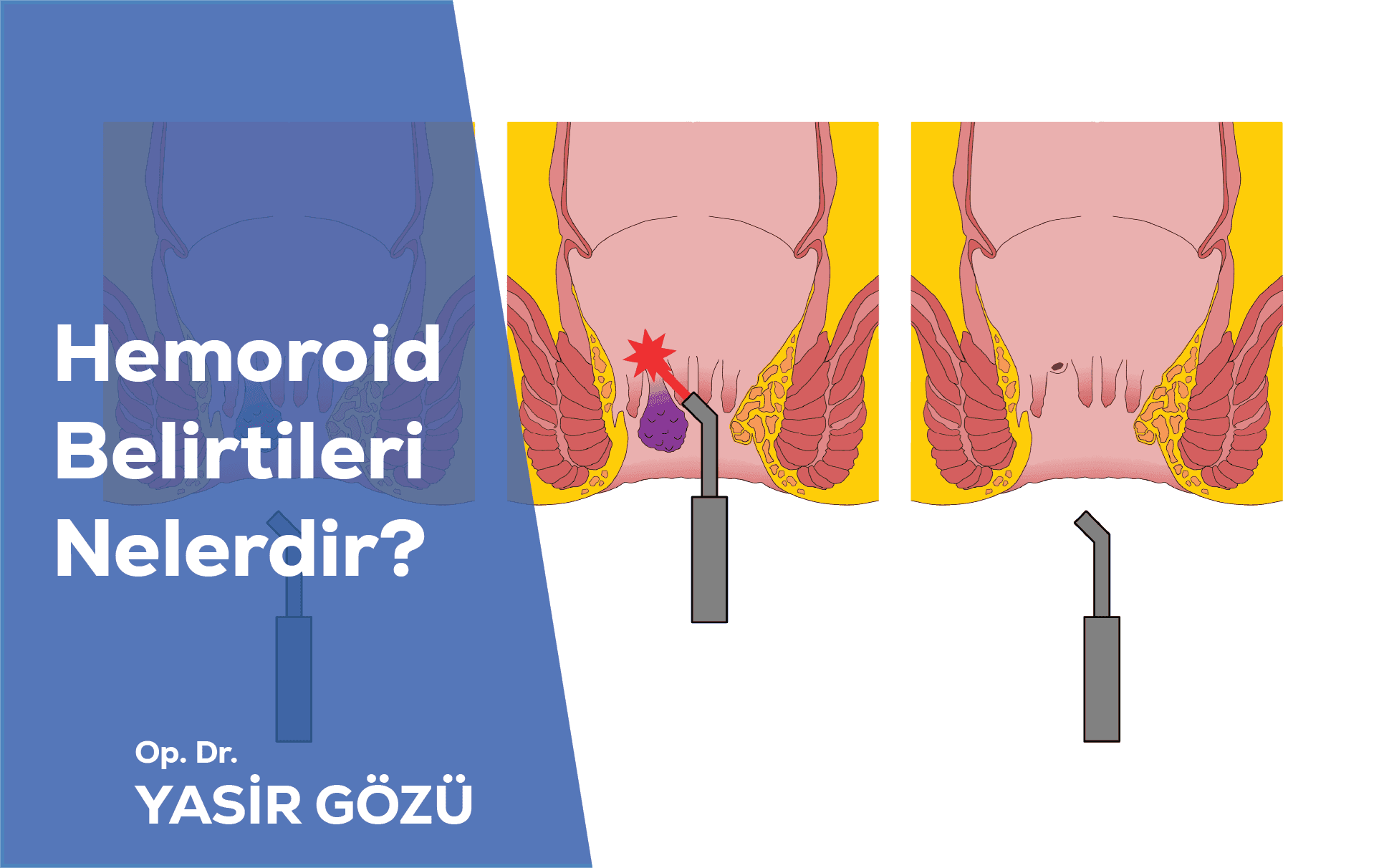
The logic is elegant: through a millimetric entry point, a thin laser fiber is advanced into the enlarged cushion. The fiber delivers controlled heat to the tissue from within; the vascular network contracts, the cushion shrinks, and over the following weeks it approaches its original volume. No incision, no stitches, no tissue removal; and therefore no open wound. The procedure takes 15-30 minutes in most cases, and you go home the same day.
Who is it ideal for?
Laser's stage is grade 2 and 3 internal hemorrhoids: cushions that bleed and prolapse but have not yet grown enormous. In this group, the comfort-to-outcome balance is incomparably in its favor over classic surgery. With the large, permanently prolapsed cushions of grade 4, honesty is required: laser alone is usually not enough; either combined techniques or classic surgery must be discussed. In the acute phase of a thrombosed external hemorrhoid, the agenda is likewise not laser but a minor intervention. In short: laser is not a magic wand but a brilliant tool in the right patient; and the right patient is identified by examination.
What is the procedure day like?
You arrive in the morning with an empty stomach; the procedure is performed under brief anesthesia. When you wake up, you usually get up without a dressing; at most a small pad. A few hours of observation, then home. In the first days there is a feeling of fullness and mild soreness; my patients compare it to the "surgical pain" they expected and always say the same thing: "Was that all?" Most desk workers are back at work the next day or the day after.
An honest comparison with classic surgery
| Laser (LHP) | Classic hemorrhoidectomy | |
|---|---|---|
| Incision/stitches | None | Yes |
| Pain | Mild soreness, a few days | Significant; needs 1-2 weeks of management |
| Return to work | 1-2 days | 2-4 weeks |
| Strongest at grade | 2-3 | 4 and giant prolapses |
| Recurrence | Low; rises with grade | Lowest |
To sum up the table in one sentence: classic surgery is the "most radical" solution, laser the "most comfortable" one; which is right for you is determined by your grade.
What to watch for afterwards?
The formula is familiar: keep your stool soft, take warm sitz baths, avoid heavy lifting in the first week, and keep toilet sessions short. And know one truth from the start: laser does not treat your habits. If constipation and the phone-on-the-toilet routine continue, new cushions can enlarge over the years. If half of the durability is the procedure, the other half is you. Details of the process are in the recovery article.
Frequently asked questions
Is the procedure painful?
The procedure is done under anesthesia; you feel nothing. The soreness afterwards is easily managed with simple painkillers in most patients; it is not in the same league as the pain of incisional surgery.
Will my bleeding stop right away?
Since the shrinkage completes over weeks, occasional light bleeding can occur early on; it gradually tapers off. Increasing or heavy bleeding, however, is a reason to come in for a check.
If it recurs, can laser be repeated?
Yes; because no tissue is removed, all options remain on the table. The real antidote to recurrence, though, is permanently fixing your constipation pattern after the procedure.
Does laser work on external lumps and skin tags?
A non-thrombosed external component and small skin tags can be corrected in the same session. With large, permanent prolapses the plan changes; it becomes clear at the examination.
What determines the price?
The grade, the number of cushions, and the facility's terms. The reason we do not quote figures over the phone is the same one I explained in the fistula article: a price given without seeing the case is either too low or inflated.
References
- American Society of Colon and Rectal Surgeons (ASCRS) — Clinical Practice Guidelines for Hemorrhoids, fascrs.org
- Turkish Society of Colon and Rectal Surgery, tkrcd.org.tr
Is your grade suitable for laser? The answer takes a ten-minute examination: 444 8 623 — Op. Dr. Yasir Gözü. For all the options, see the treatment page.
Yasir Gozu, MD
General Surgery Specialist
He has worked in anorectal diseases (proctology) for over twenty years, focusing on non-surgical laser treatments for hemorrhoids, anal fistula, anal fissure and pilonidal sinus. He sees patients at Avrupa Cerrahi in Besiktas Levent.
Content owner: Yasir Gozu, MD
Published: April 9, 2026
Last updated: September 8, 2026