The medical information in this article was written by Yasir Gozu, MD (General Surgery Specialist) and checked against current medical sources.
This article is for information purposes only; it is not a substitute for an examination and a physician’s assessment.
There is no single procedure called "bleeding laser"; laser plays three different roles depending on the source of the bleeding: LHP for hemorrhoidal bleeding (shrinks the bleeding cushions from the inside; the most frequent laser indication among bleeding conditions), for chronic fissures spasm release and freshening of the wound, and FiLaC for bleeding within fistula discharge. All three are incision-free, day-case procedures with a return to work in 1-2 days. The precondition is non-negotiable: laser is not planned until the source of the bleeding is established by examination; for bleeding originating higher in the bowel (polyps, inflammation), the address is colonoscopy, not laser.
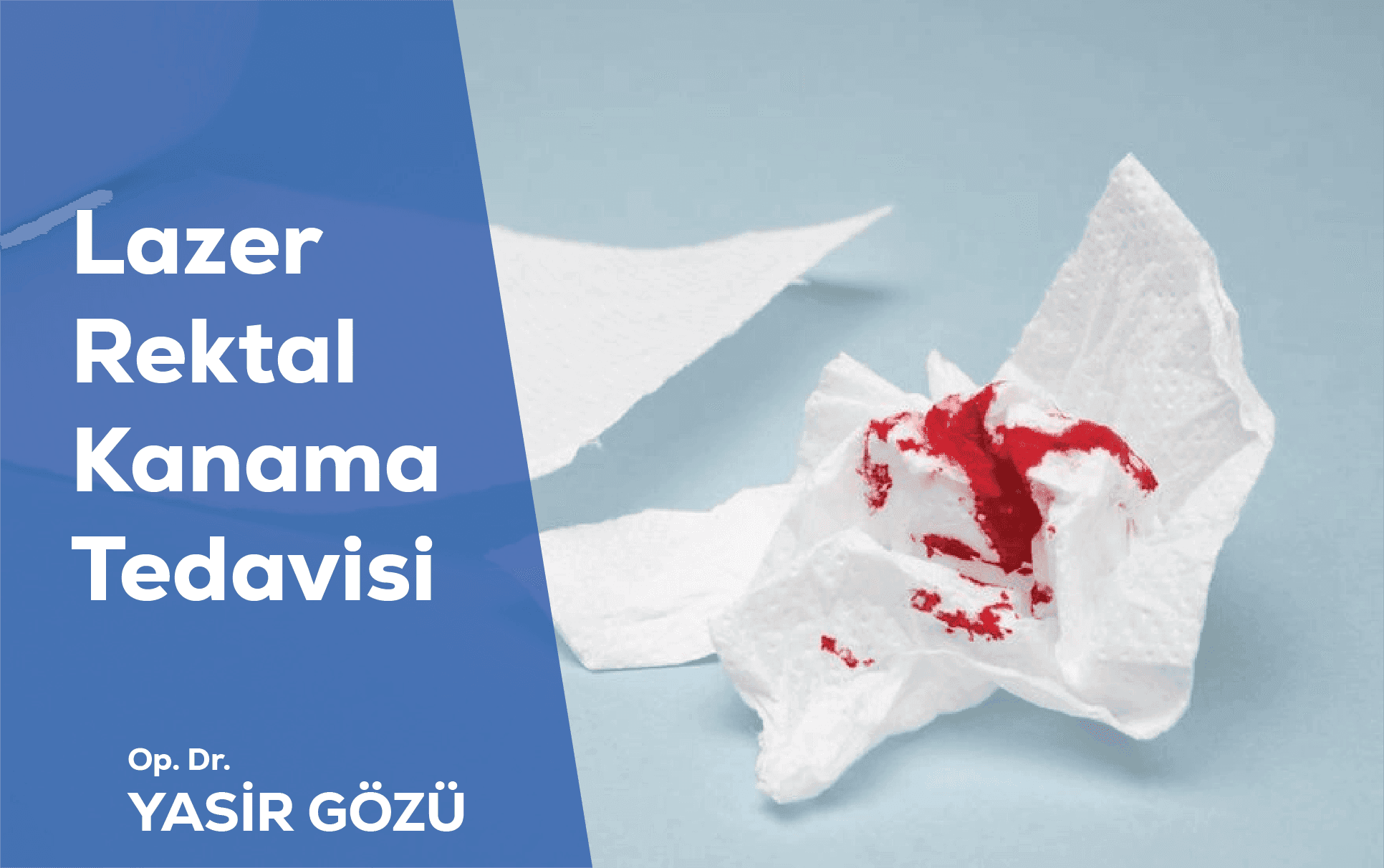
If you arrived at this page by searching "rectal bleeding laser treatment", let us first set the expectation straight: laser is not a bleeding-stopper but a surgical tool that treats the disease doing the bleeding. That distinction gets lost on marketing pages; it will not get lost here. Below you will find which bleeding is solved with laser, which bleeding is not laser's job, and the process at our clinic.
Examination first: Laser's precondition
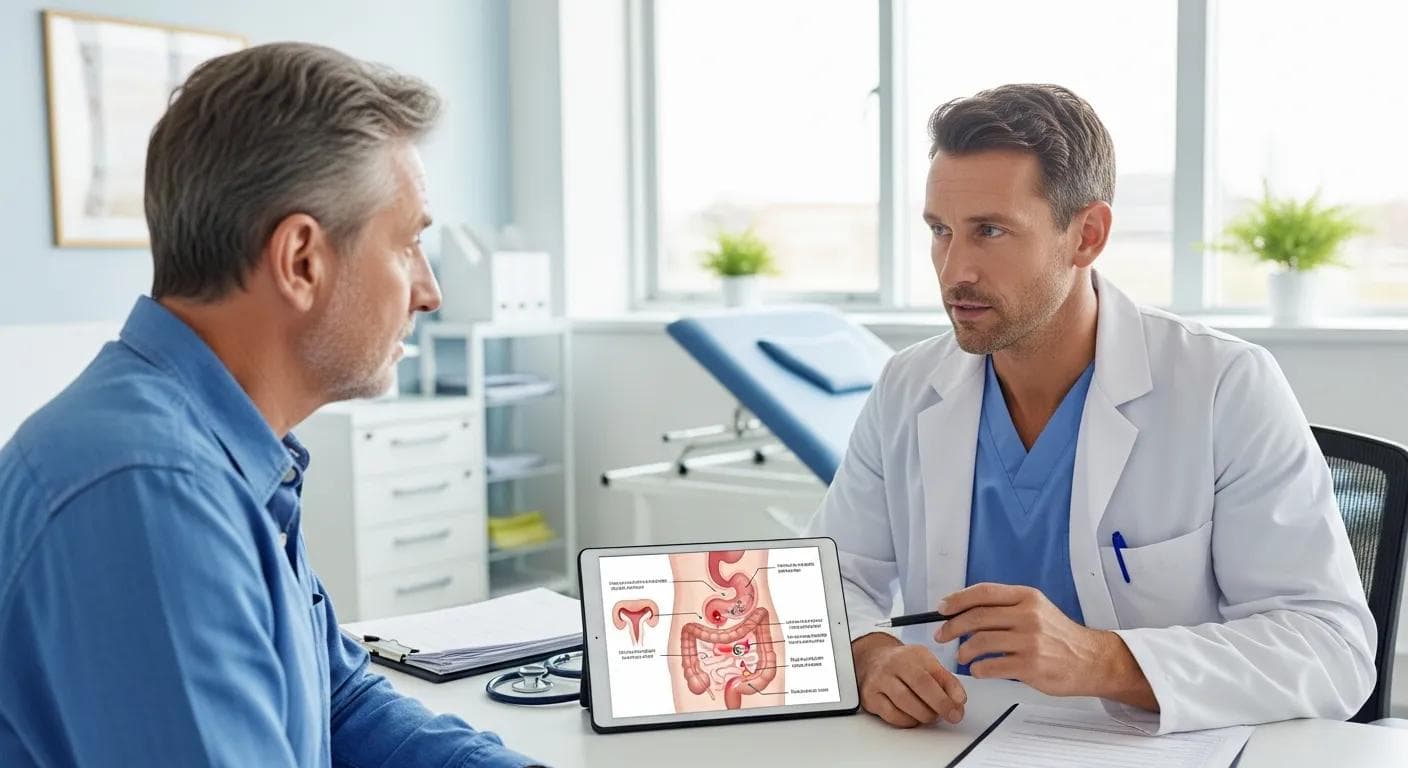
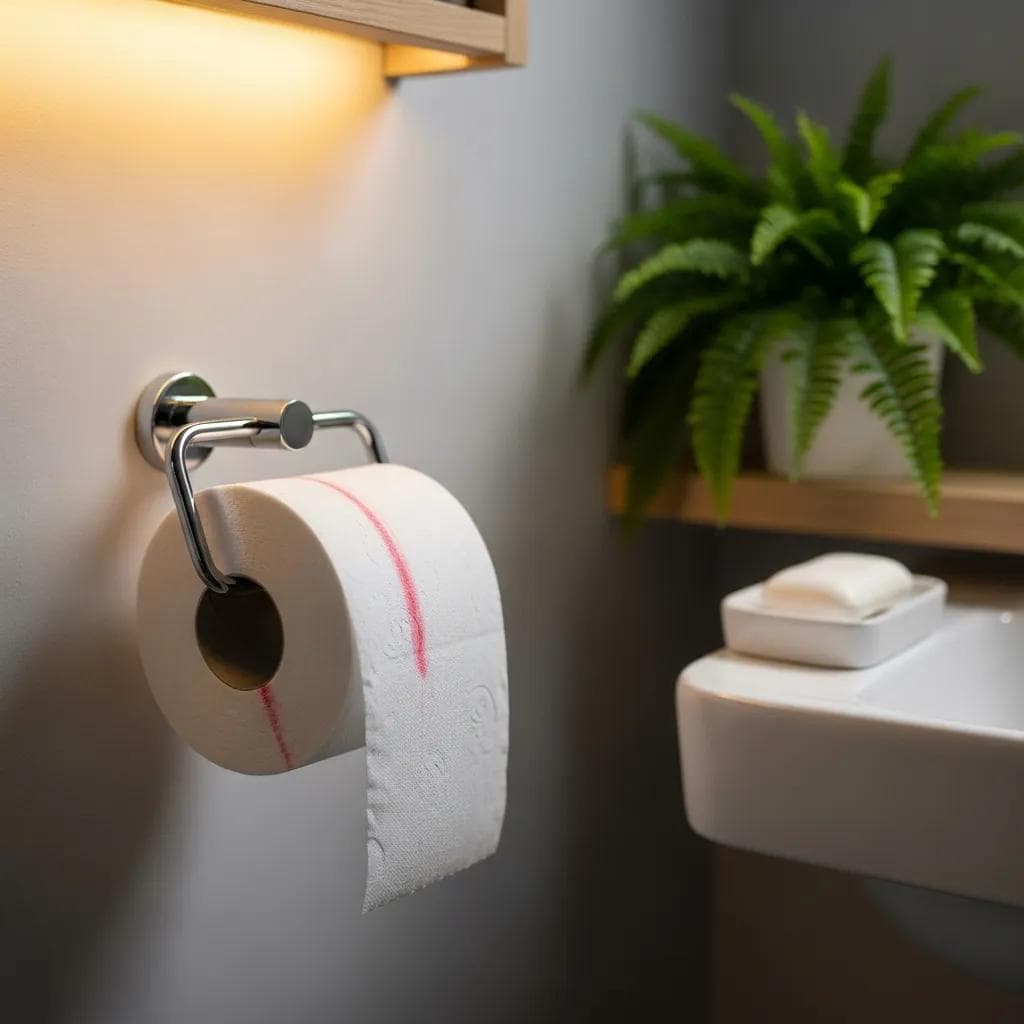
Bleeding is a symptom (guide article), and a laser plan is built only after the source has been named. At the examination, the bleeding's pattern (color, location, companions: color dictionary) and inspection of the anal canal pin down the source in most cases; with suspicious patterns and over age 45, the upper bowel is cleared first with colonoscopy. An approach that skips this sequence and promises "laser for the bleeding" is at best incomplete; a bleeding polyp does not go quiet under a hemorrhoid laser; it gets masked.
Role 1: LHP for hemorrhoidal bleeding, the most frequent scenario
This is the group of bleeding patients that intersects most with laser: the source of painless, bright, dripping blood is enlarged hemorrhoidal cushions, and LHP (laser hemorrhoidoplasty) was designed for exactly this job: a thin laser fiber is advanced into the cushion through millimetric entry points, controlled energy shrinks the tissue from within; the bleeding vascular network shrinks and the bleeding dries up at its source. No incision, no stitches, no open wound; the procedure is day-case, and most patients return to work in 1-2 days. The honest limit: the group where LHP shines is grade 2-3 hemorrhoids; in advanced prolapse it may not suffice on its own (I covered the comparison in the LHP article). For early-stage bleeding, lifestyle measures at home are tried first; we do not sell a procedure to everyone.
Role 2: Laser for fissure bleeding
If the source of the bleeding-plus-sharp-pain duo is a chronic anal fissure and the cream and muscle-relaxant injection steps have failed, laser relaxes the spasm without cutting the muscle and freshens the calloused wound bed; once the wound closes, the bleeding ends with it. Because the muscle is preserved, gas and stool continence is not put at risk (laser for fissures).
Role 3: FiLaC for bleeding discharge from a fistula
If the source of blood-streaked, foul-smelling discharge is a fistula tunnel, the FiLaC method shrinks and seals the tunnel from the inside; the discharge and its bleeding dry up together. I quote the success band without exaggeration (60-70%; on failure, a repeat or a classic method remains possible), and because no muscle is cut, its most valuable advantage is preservation of continence (details).
Bleeding that is not laser's job
The honesty table: dark blood mixed into the stool (suspected polyp, inflammation or diverticulum) calls for colonoscopy. Black, tarry stool points to the upper digestive tract and urgent gastroenterology. Inflammatory bowel disease bleeding is managed medically. Any picture suspicious for cancer requires staging first, then an oncological plan. In these groups the sentence "let's solve it with laser" is never uttered; if you hear it uttered, get a second opinion.
The process at our clinic
Examination and instrumented inspection if needed establishes the source (with a suspicious pattern, colonoscopy is planned first); if there is a laser-suitable source, the procedure is done in most cases the same week; in suitable cases the same day: brief anesthesia, 15-30 minutes, a few hours of observation, home by evening. Showering is allowed the next day; at follow-up we confirm the bleeding has dried up. The price is given after the examination, in writing and itemized; we do not quote prices over the phone. For patients from out of town a single-day program is possible; we arrange the planning by phone.
Frequently asked questions
Does the bleeding stop completely after the laser procedure?
With a correctly chosen source, yes; after LHP, the drying up of hemorrhoidal bleeding is the expected outcome. Slight oozing in the first days is normal; bleeding that changes pattern or persists is assessed at follow-up.
I am elderly and on blood thinners; is laser suitable?
Usually yes; laser's low-bleeding, incision-free nature is exactly what gives it the edge over classic surgery in this group. Thinner management (stopping/bridging) is planned together with your cardiologist.
Is a colonoscopy required first?
Not for everyone: in a young patient with a typical hemorrhoid-fissure picture, the examination is sufficient. Over 45, mixed-in dark blood, anemia, family history and a change in habits: then yes; the upper bowel is cleared first, and laser is discussed after.
Can it recur after the procedure?
In hemorrhoids, laser shrinks the cushion, but if habits do not change, new enlargement is possible over the years; the fiber-water-toilet routine is the lasting insurance. The recurrence scenarios for fissures and fistulas are covered honestly in their own articles.
Sources
- American Society of Colon and Rectal Surgeons (ASCRS), fascrs.org
- Turkish Society of Colon and Rectal Surgery, tkrcd.org.tr
Let us pin down the source of your bleeding and (if it is a case for laser) plan the comfortable solution: 444 8 623, Levent.
Yasir Gozu, MD
General Surgery Specialist
He has worked in anorectal diseases (proctology) for over twenty years, focusing on non-surgical laser treatments for hemorrhoids, anal fistula, anal fissure and pilonidal sinus. He sees patients at Avrupa Cerrahi in Besiktas Levent.
Content owner: Yasir Gozu, MD
Published: April 30, 2026
Last updated: September 9, 2026