The medical information in this article was written by Yasir Gozu, MD (General Surgery Specialist) and checked against current medical sources.
This article is for information purposes only; it is not a substitute for an examination and a physician’s assessment.
FiLaC is an incision-free method that closes the fistula tunnel from the inside with a thin laser fiber; because it never touches the muscle that keeps the anus closed, it practically eliminates the risk of incontinence. It is a day procedure, and most patients return to daily life the next day. The suitable candidate: single-tract fistulas without extensive branching. The success range in the literature is 60-70%, and the procedure can be repeated if needed.
I can summarize the most meaningful advance of the last decade in fistula treatment in one sentence: instead of laying the tunnel open, we can now close it. Some classic operations cut the tunnel open and wait weeks for the open wound to fill in. Laser reverses the logic; it shrinks and seals the tunnel from the inside, right where it is. In my clinic, this is the first option I discuss for every suitable fistula; below I will explain why, honestly, limits included.
What exactly is FiLaC?
The name comes from "Fistula Laser Closure." A flexible laser fiber, close to a hair's breadth, is advanced into the tunnel through its skin-side opening. As the fiber is withdrawn, it delivers controlled heat 360 degrees around itself; the tissue in the tunnel wall contracts and the channel closes. The tunnel's opening on the bowel side is also closed in the same session so that the source dries up. The whole procedure takes 20-30 minutes in most cases.
Why do we value it so much? The muscle question
The real sensitivity in fistula surgery is not the tunnel but its neighbor, the muscular ring; the muscle that keeps the anus closed and holds back gas and stool. Some classic open methods demand a share of this muscle. Laser's greatest promise is this: it never touches the muscle. This effectively takes patients' deepest fear (the risk of incontinence) off the table. I discussed this openly in the risks article.
Who is a suitable candidate?
The honest answer: not everyone. The profile that gets the best results from laser is clear; single-tract fistulas without heavy branching and without an active abscess. In a branched fistula or one with a pocket of pus, we first clean the ground; sometimes we make the tunnel "laser-ready" with a few weeks of loose seton preparation. In Crohn's-related fistulas, the plan is built together with control of the disease. I do not say "laser will do it" without mapping the tunnel at the examination and, if necessary, on MRI; I explained this selection logic in the diagnosis article.
The procedure day: Hour by hour
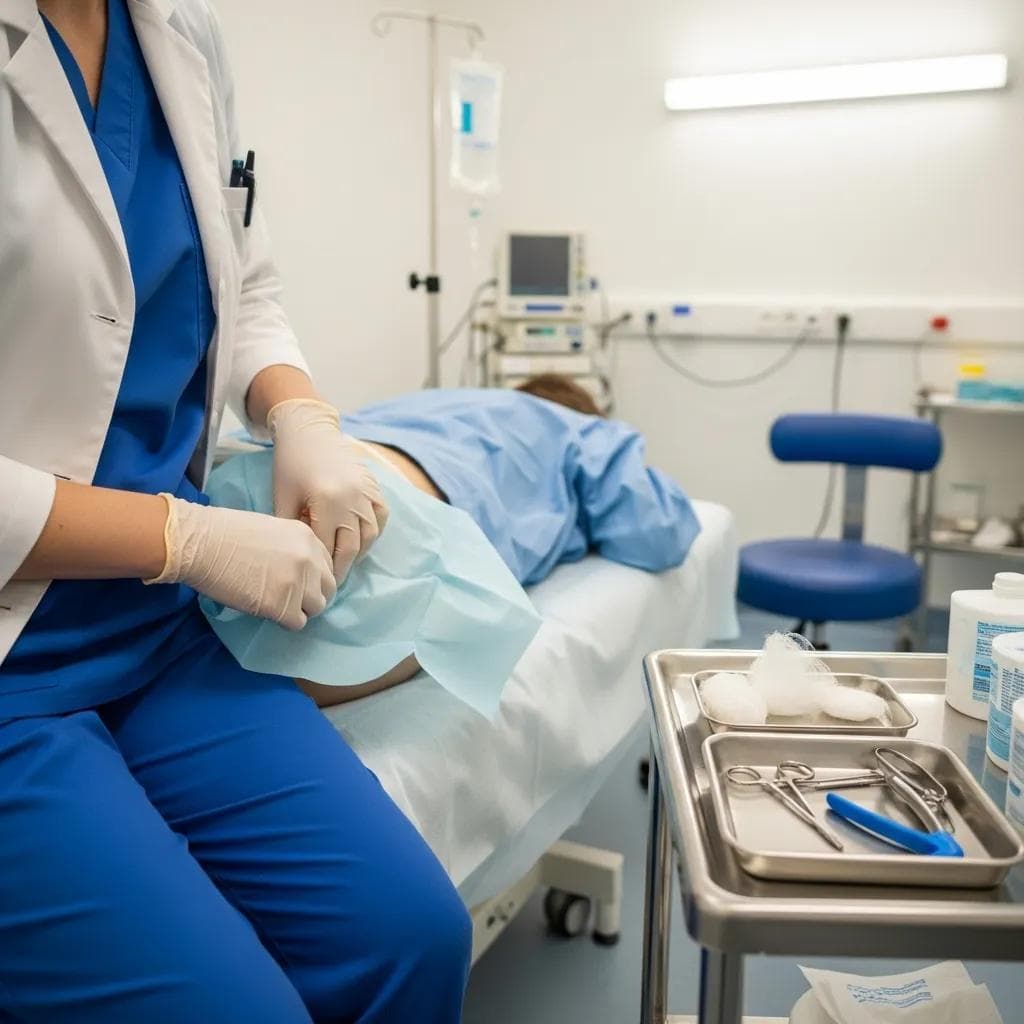
You arrive in the morning with an empty stomach; the procedure is performed under brief anesthesia; usually sedation or spinal. What surprises most patients on waking is this: the expected "surgical pain" is not there; most describe it as soreness. After a few hours of observation you go home the same day. Showering is allowed the next day; desk workers usually return to work within a day or two. There is no dressing hassle; a small pad is enough.
Success rate: The numbers without the marketing
If anyone tells you "one hundred percent," walk away. In the literature, FiLaC's success range is around 60-70%; in well-selected simple fistulas the figure moves up, in neglected complex fistulas it moves down. And if it does not close? What I love about laser is this: it burns no bridges. Because the muscle is not cut, every option (including repeating the laser) stays on the table. With classic open surgery, there is no going back.
What to watch for after treatment?
Three simple rules: keep your stool soft (fiber and plenty of water), take a warm sitz bath a few times a day, and avoid heavy lifting in the first weeks. Slight seepage is normal in the first days; fever, worsening throbbing, or foul-smelling discharge is a reason to phone us. For the detailed process, see the recovery guide.
Frequently asked questions
Will I feel pain during the procedure?
No; it is performed under anesthesia. The soreness afterwards is easily managed with simple painkillers in most patients.
How many days until I return to work?
Usually 1-2 days for desk jobs, around a week for heavy physical work. Next to the weeks-long recovery of classic open surgery, this is laser's most tangible gain.
What happens if the laser does not take?
If the tunnel does not close, we reassess; the laser can be repeated, or we move to another muscle-sparing method such as LIFT. Because the muscle was not cut, no door has been closed.
Can every fistula be treated with laser?
No; and trust the clinic that tells you this up front. Branched, abscessed, or Crohn's-related fistulas first need preparation, and sometimes a different method.
Why does the price differ from classic surgery?
The procedure fee is higher because of the single-use laser fiber and the equipment cost; not needing a hospital stay balances the total. Details are in the pricing article.
References
- American Society of Colon and Rectal Surgeons (ASCRS) — Clinical Practice Guidelines for Anorectal Abscess and Fistula, fascrs.org
- Turkish Society of Colon and Rectal Surgery, tkrcd.org.tr
Whether your fistula is suitable for laser becomes clear with a ten-minute examination. Our clinic in Levent: 444 8 623.
Yasir Gozu, MD
General Surgery Specialist
He has worked in anorectal diseases (proctology) for over twenty years, focusing on non-surgical laser treatments for hemorrhoids, anal fistula, anal fissure and pilonidal sinus. He sees patients at Avrupa Cerrahi in Besiktas Levent.
Content owner: Yasir Gozu, MD
Published: April 9, 2026
Last updated: September 9, 2026