The medical information in this article was written by Yasir Gozu, MD (General Surgery Specialist) and checked against current medical sources.
This article is for information purposes only; it is not a substitute for an examination and a physician’s assessment.
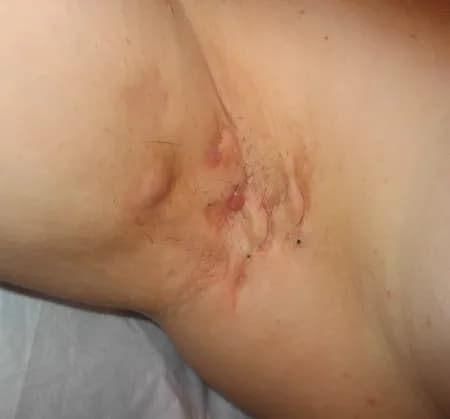
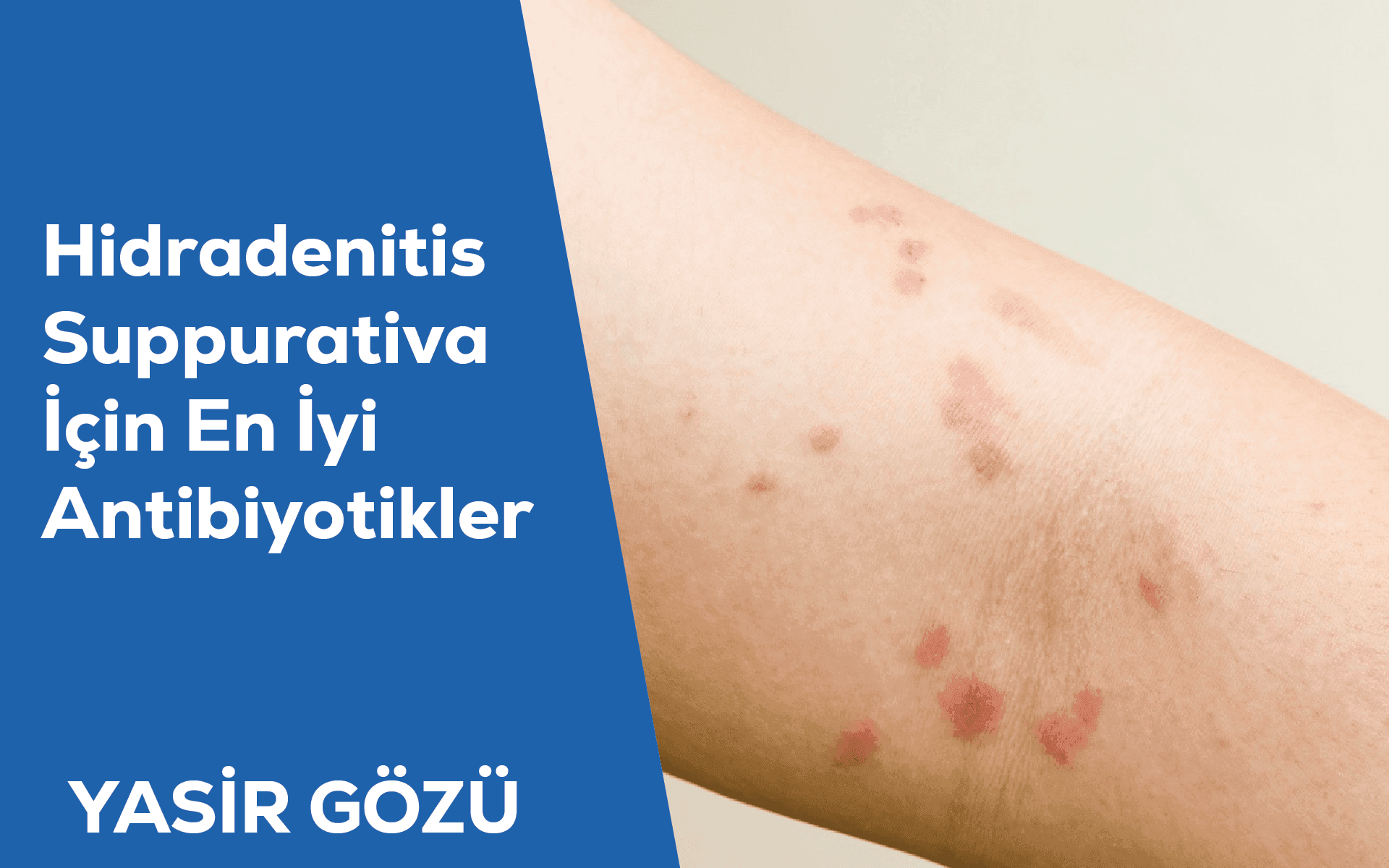
The three signature symptoms of hidradenitis suppurativa (HS): painful lumps the size of a chickpea to a walnut recurring in the same areas; double-headed blackheads on the skin (double comedones; specific to HS); and, in the advanced stage, draining tunnels and firm scars. Its biggest difference from a boil is the pattern of recurrence; from a cyst, its pain and inflammation; and telling it apart from a fistula around the anus requires a specialist examination. Premenstrual flare-ups and worsening with sweat and friction are typical.
To me, the most painful aspect of HS is this: for years, the disease disguises its symptoms as "other things". It gets mistaken for a boil, for a pilonidal sinus, for "that's just how my body is". When I tell you that the average delay in diagnosis is measured in years, the point of this article becomes clear: the patient who recognizes the symptoms early catches the disease at an early stage; and early-stage HS and late-stage HS are practically two different diseases.
The first sign: A painful lump rising from deep down
HS typically starts with a single lump: in the armpit or the groin, a reddened firmness the size of a chickpea to a hazelnut, coming from deep under the skin and painful to the touch. What sets it apart from a pimple is its depth and its pain; patients usually call it an "infected hair" or a "boil". Within a few days the lump either settles on its own or bursts, drains its contents and brings relief. The problem is this: the story does not end there. Weeks or months later, a new one appears in the same area; often at the very same spot.
The real signature: The pattern of recurrence
If I had to pick a single symptom, this would be it. A boil comes and goes and changes location; HS is remarkably consistent: it always picks the same areas: armpit, groin, under the breast, around the anus, buttocks. If the answer to "How many times in the last two years has a lump come up in the same armpit?" is three or more, HS is now a strong possibility. Flare-ups clustering in the premenstrual period, in hot sweaty months and in stressful weeks (the stress connection) is also part of the pattern.
The visible clue: Double-headed blackheads
This is HS's quiet but specific finding: blackheads standing in pairs, bridged together, in the affected area (double comedones in medical language). What distinguishes them from ordinary blackheads is their paired, grouped arrangement; it shows that two hair follicles underneath have merged and open through a single mouth. If you see these in your mirror in the armpit or groin (even without any lump) they are worth having assessed.
The advanced stage: Tunnels, discharge, scars
Over time, recurrent abscesses merge under the skin and form sinus tracts: tunnels: yellowish-bloody, at times foul-smelling discharge that comes out of several openings at once when pressed; cord-like firm bands on the skin; and pitted, bridged scars left behind by every healed attack. This picture announces that the disease has moved into Hurley stage 2-3 (staging guide) and it fundamentally changes the treatment plan. Odor and discharge are the symptoms my patients hide the most and the ones that steal the most from their social lives. I want to say explicitly that they are not without a solution.
Region by region: What does it get confused with?
| Region | HS symptom | Most often confused with | Distinguishing clue |
|---|---|---|---|
| Armpit | Recurrent painful lump | Boil, ingrown hair | Recurrence pattern and double comedones |
| Groin / genital area | Lumps and tunnels | Genital warts, cyst, LGV | HS is painful and deep; warts are painless and superficial |
| Around the anus | Draining openings | Anal fistula | A fistula originates from the bowel and is a single channel; HS is a multifocal skin disease; the distinction is made by examination |
| Buttocks / tailbone | Lump and discharge | Pilonidal sinus | Pilonidal disease is single-focus at the midline; HS is widespread and bilateral |
| Under the breast | Recurrent inflamed lump | Nipple infection | Alignment along the skin fold suggests HS |
The row about the anal region matters to me in particular: perianal HS and anal fistula are not only confused with each other, they can also coexist. Since the two are treated in completely different ways, recurrent discharge in this area must be mapped by a physician experienced in proctology.
Warning signs
Bring the assessment forward if any of these apply: a rapidly growing abscess with fever (come in the same day; drainage may be needed); discharge becoming permanent (a signal of tunnel formation); firmness and scarring that restricts movement; and a new, different, non-healing sore in an area that has been draining for years (rare but important; it needs checking in neglected cases). And one more thing: if you have already had your third recurrence, the alarm has been ringing: the cost of waiting is skipping up a stage.
Frequently asked questions
My lump is painless; could it still be HS?
HS lumps are typically painful; a single painless, slow-growing lump suggests a cyst or lipoma instead. Even so, if there is a recurrence pattern, have it examined.
White-yellow material comes out when I squeeze it; isn't that just a pimple?
What comes out does not settle the question; abscesses and pimples both drain. What makes the distinction is depth, pain and the recurrence pattern. And please do not squeeze: squeezing spreads the inflammation deeper and accelerates tunnel formation.
My symptoms flare around my period; is that a coincidence?
It is not; hormonal fluctuation is a known trigger of HS; in many patients, flare-ups cluster in the week before menstruation. This pattern is one of the clues supporting the diagnosis.
I have only had one boil; should I worry?
No; a single boil is a boil. HS requires a recurrence pattern. But if a second or third one comes up in the same place, get it assessed instead of saying "another boil".
Sources
- American Academy of Dermatology (AAD) — Hidradenitis Suppurativa, aad.org
- NHS — Hidradenitis suppurativa, nhs.uk
Let's read your pattern together; putting a name to the recurring lump is half the solution: 444 8 623, Levent. For the full picture, see the hidradenitis suppurativa guide.
Yasir Gozu, MD
General Surgery Specialist
He has worked in anorectal diseases (proctology) for over twenty years, focusing on non-surgical laser treatments for hemorrhoids, anal fistula, anal fissure and pilonidal sinus. He sees patients at Avrupa Cerrahi in Besiktas Levent.
Content owner: Yasir Gozu, MD
Published: April 9, 2026
Last updated: September 9, 2026