This article is for information purposes only; it is not a substitute for an examination and a physician’s assessment.
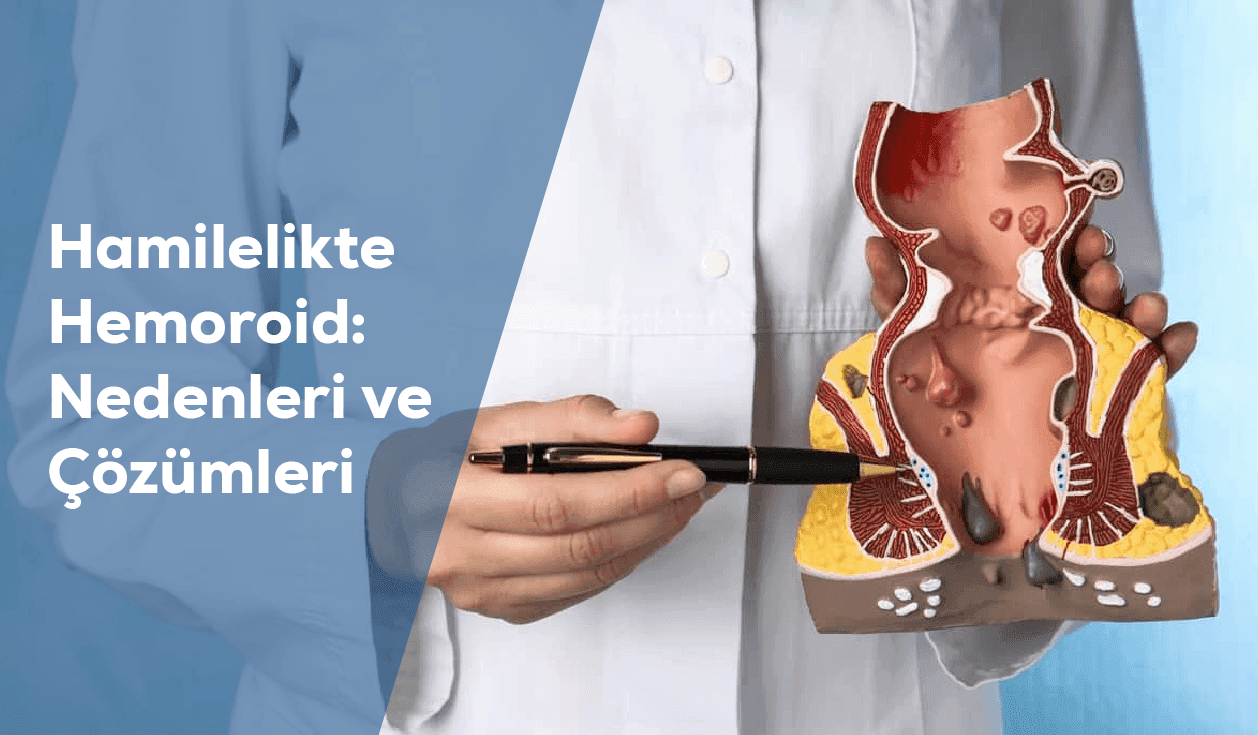
Nearly half of pregnant women experience hemorrhoids; the culprits are progesterone (which slows the bowel), the pressure of the growing uterus, and the constipation caused by iron supplements. During pregnancy, management relies on safe home measures; creams and suppositories are used only with a doctor's approval. Hemorrhoids are no obstacle to vaginal delivery; most complaints recede on their own after the birth, and for those that persist, a definitive laser solution is planned after the postpartum period.
The opening sentence I hear most often from my pregnant patients is an apology: "I'm sorry to come to you with something like this..." Yet there is nothing whatsoever to apologize for: hemorrhoids in pregnancy are so widespread that they should count as a natural chapter of antenatal care. They affect close to one in every two pregnancies; and when managed properly, you get through them without losing the joy of your pregnancy.
Why does pregnancy love hemorrhoids so much?
Three mechanisms operate at once. Progesterone — pregnancy's protective hormone — relaxes smooth muscle and slows the bowel along with it; constipation follows pregnancy around like a shadow. The growing uterus loads a little more pressure every week onto the abdominal veins and the anal region. The third rarely occurs to expectant mothers: iron supplements. Iron given for anemia hardens the stool as a side effect. Constipation + pressure + hardened stool — the perfect storm for hemorrhoids.
Symptoms and the "is this normal?" question
The picture is the same as outside pregnancy: bright red bleeding with bowel movements, itching, a tender lump you can feel, and at later grades a sensation of prolapse. In pregnancy it flares especially in the third trimester. In two situations we ask for an assessment rather than saying "it's normal": recurring bleeding (in pregnancy, every bleeding issue is handled meticulously) and a suddenly enlarging purple, hard, very painful swelling — this may be a thrombosed external hemorrhoid, which can be safely relieved under local anesthesia even during pregnancy.
Safe management during pregnancy
The good news: all of the most effective measures are permitted in pregnancy. A warm sitz bath (10-15 minutes, 2-3 times a day) is both safe and instantly soothing. A fiber and water routine (vegetables and fruit, whole grains, 2+ liters of water a day) is already part of pregnancy nutrition; if your iron supplement has caused constipation, discuss the formulation or the dose with your obstetrician — do not stop it, discuss it. Lying on your left side reduces the uterus's pressure on the main vein; a win for both the baby's circulation and your hemorrhoids. Break up long periods of standing and sitting with short walks; Kegel exercises support circulation in the area.
On medication and creams there is a single rule: in pregnancy, no cream, suppository or painkiller is used on your own initiative. Some products are considered safe in pregnancy; but the decision of "which one, in which trimester, for how long" must be made jointly with your obstetrician. As for internet recipes (garlic, vinegar and the like) — I will not even discuss them in pregnancy; they burn the skin, do not use them at any time.
Are hemorrhoids an obstacle to delivery?
No. Hemorrhoids on their own are neither an obstacle to vaginal delivery nor a reason for a cesarean. The pushing stage of labor can temporarily enlarge existing hemorrhoids — going in knowing this spares you a panic in front of the mirror after the birth. The decision on the mode of delivery always belongs to your obstetrician; in that decision, hemorrhoids are an extra, not the lead. The details are in this article.
After the birth: wait, recede, resolve if needed
Hemorrhoid complaints are common in the first weeks after delivery — and in the postpartum period, the fluid demands of breastfeeding and the fatigue of childbirth are added on top. Be patient: because the source of the pressure (the uterus) is gone, a significant share of cases recede on their own within 2-3 months. Keep the home protocol going (baths, fiber, water) through the postpartum weeks; while breastfeeding, too, make cream and medication decisions together with a doctor.
As for the cushions that do not recede, that you can feel, and that erode your quality of life: now is exactly the time for a permanent solution. Laser hemorrhoid treatment is a same-day procedure and, with planning, is performed safely in breastfeeding mothers — a short pump-and-wait window is all it takes. Do not postpone for years with "once the baby is older..."; walking into a second pregnancy with complaints that have run since the third trimester is the scenario I see most often.
Frequently asked questions
Can hemorrhoids in pregnancy harm the baby?
No — hemorrhoids are an entirely local vascular problem; they have no effect on the baby, the placenta or the course of the pregnancy.
Can hemorrhoid surgery or laser be done during pregnancy?
Planned procedures are left until after the birth. The exception is a very painful thrombosed external hemorrhoid: a small intervention under local anesthesia can be performed safely even during pregnancy.
When should I come for an examination after giving birth?
If your complaints persist, after the postpartum period (the first 6-8 weeks) is the ideal window. If there is bleeding, hardness or a growing swelling, come without waiting.
Will it come back in every pregnancy?
If you are predisposed, the likelihood of recurrence in a subsequent pregnancy is high. Getting definitive treatment between pregnancies and establishing a constipation-proof routine makes the second round far more comfortable.
Sources
- American College of Obstetricians and Gynecologists (ACOG), acog.org
- American Society of Colon and Rectal Surgeons (ASCRS), fascrs.org
- NHS — Piles in pregnancy, nhs.uk
You are not alone — in pregnancy or after the birth. Let's build the plan together: 444 8 623, Levent.
Content owner: Yasir Gozu, MD
Published: May 22, 2024
Last updated: July 8, 2026