This article is for information purposes only; it is not a substitute for an examination and a physician’s assessment.
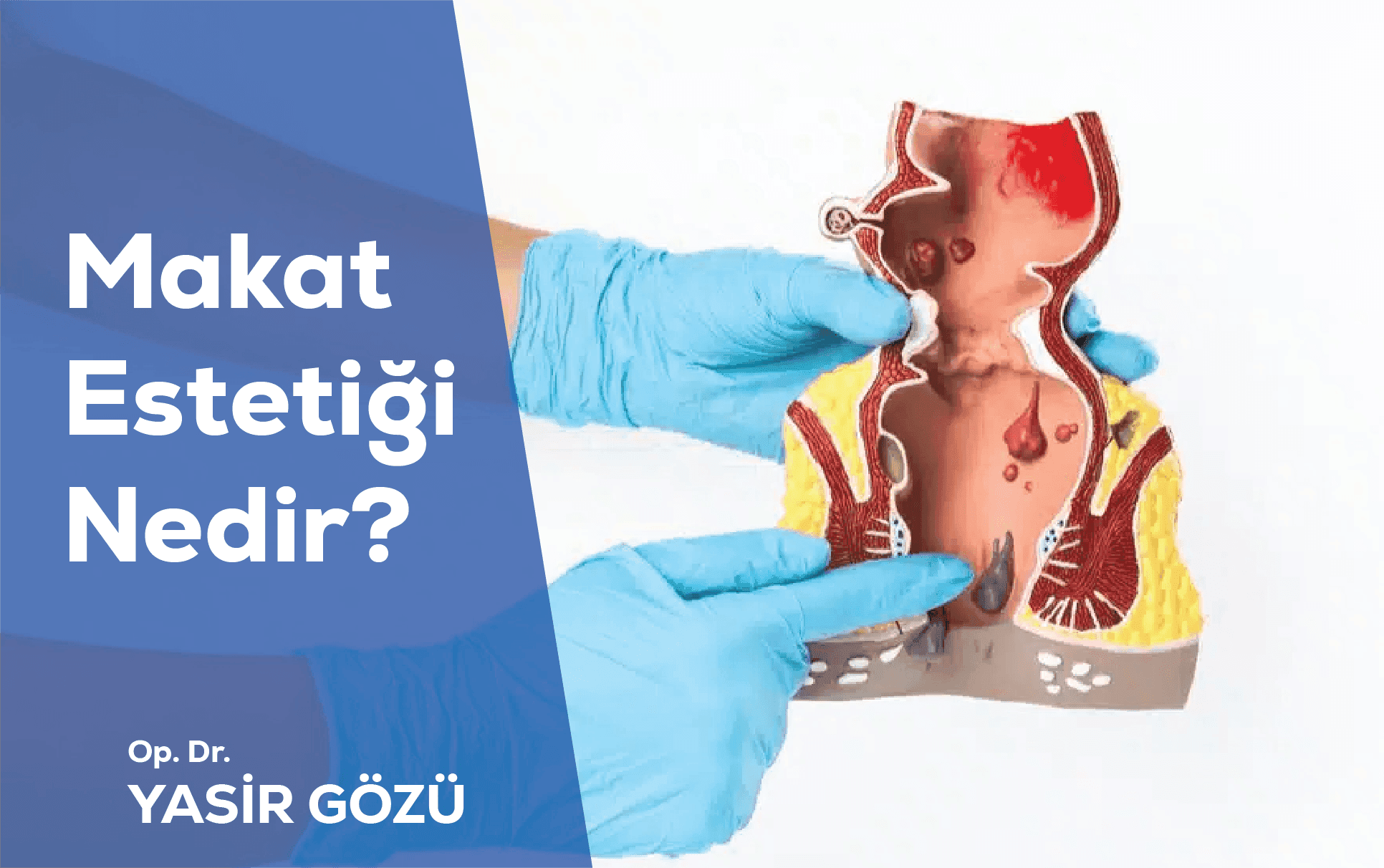
The main subject of anal aesthetics is the removal of skin tags left behind by past hemorrhoid and fissure attacks: a procedure done under local anesthesia, mostly laser-assisted, same-day and comfortable. There are two legitimate reasons for the request: hygiene difficulty (the folds between tags cannot be cleaned properly, setting up an irritation-itching cycle) and self-confidence. Two honest rules: before the procedure, active disease (fissure, hemorrhoids, warts) is ruled out or treated; and keep your distance from skin-lightening or whitening promises — there is no permanent, guaranteed "bleaching" method.
My reason for writing about this is a contradiction I have watched in my practice for years: anal aesthetics is the most wondered-about yet least askable topic. Patients circle around for minutes and only ask in their final sentence — "Oh, and doctor, there's also this bit of excess skin..." Yet medically the subject is entirely ordinary: the area's scars, skin folds and appearance concerns are real complaints with real treatments. Let's lift the curtain of shame and talk plainly.
What does "anal aesthetics" actually cover?
In practice, three headings: 1) Skin tags: flaps of loose skin left behind by past thrombosis attacks, childbirth and the sentinel tag of a chronic fissure — by far the leading aesthetic request. 2) Scars and tissue irregularities: correction of marks from past surgery or abscesses. 3) Appearance and color concerns: questions about the area's natural darkness — which I will address honestly in a moment. Let me also say what is not in scope: active diseases (prolapsing hemorrhoids, warts, fistula) are a matter of treatment, not aesthetics; until they are resolved, aesthetics is not on the table.
Why do skin tags become a problem?
Both reasons are legitimate, and I take both seriously. Hygiene: the spaces between the tags cannot be fully cleaned after the toilet; the moisture and residue left behind are the classic ground for the itching-irritation cycle — in other words, the issue is usually comfort before it is "cosmetics". Self-confidence: the unease felt in intimate relationships, at the gym, during hair removal is a genuine quality-of-life problem; dismissing it as "trivial" is not right. There is a truth on the other side as well: skin tags are harmless to health — you are not obliged to have them removed. The decision is entirely yours; our job is to offer accurate information and clean technique.
How is the procedure done?
First, an examination — for two reasons: to confirm that the tag really is a tag (the candidates I described in the differential article apply here too: warts, polyps, an active hemorrhoid) and to look for active disease underneath (a fissure living beneath a sentinel tag is classic — it is treated first, otherwise a new tag replaces the old one). If suitable, the procedure: under local anesthesia, the tags are removed at their base with laser or fine surgical technique; laser's advantage is its bloodless, sealing nature and faster healing. Duration is 15-30 minutes, home the same day, shower the next day. Recovery: 1-2 weeks of tenderness, full result in 3-4 weeks. Return to work is 1-2 days for most patients. Several tags can be removed in a single session; for very extensive work, a staged plan is made.
The color question: the honesty corner
My clear answer to questions about "anal bleaching": the skin around the anus is naturally darker than the rest of the body — this is not a flaw but pigment physiology, and it deepens with age, hormones and friction. What you need to know about the whitening creams and procedures on the market: their results are temporary and unpredictable, they carry a risk of irritation and blotching (even the very opposite — further darkening!), and aggressive chemicals can do harm in this sensitive area. At our clinic we do not recommend these "promise products"; no permanent, safe standard method exists today, and I advise keeping your distance from places that sell one as if it did. What genuinely improves the appearance is this: removing the skin tags, breaking the irritation cycle and restoring the skin to health — the "neat appearance" most patients are looking for is, in truth, exactly that.
Privacy and the process
These procedures are carried out at our clinic with complete privacy: the examination is draped and gentle, your records are confidential, and throughout the process you deal only with our team. The price is given in writing after the examination — according to the number of tags and the scope; we do not quote prices over the phone. If this is something you have postponed for years out of embarrassment, I can tell you that the first step is the hardest and what follows goes more easily than you imagine — it is mostly patients after the procedure who make me say that sentence.
Frequently asked questions
Is the procedure painful? What is the toilet like afterwards?
With local anesthesia the procedure is painless; the few days of tenderness afterwards are managed with paracetamol. The toilet is possible from day one — keeping the stool soft (fiber plus water) is the only rule that matters.
Can a removed tag come back?
A removed tag does not return; but new thrombosis attacks can leave new tags. That is why, if there is an underlying hemorrhoid tendency, that is managed first — it is the insurance policy on the aesthetic result.
How soon after childbirth can I have it done?
For the area to recover and breastfeeding to settle into a routine, a few months after the birth is usually appropriate; your personal timeline becomes clear at the examination. Some childbirth-related tags also shrink on their own — do not rush the decision.
Are these procedures covered by insurance?
Purely aesthetic requests are generally out of scope; however, if a tag creates hygiene problems and recurrent irritation, a medical indication may arise. After the examination you can ask your insurer with a report in hand.
Sources
- American Society of Colon and Rectal Surgeons (ASCRS), fascrs.org
For an examination where you can ask your questions without embarrassment: 444 8 623 — Levent. First we name it, then you decide.
Content owner: Yasir Gozu, MD
Published: May 10, 2024
Last updated: July 8, 2026