The medical information in this article was written by Yasir Gozu, MD (General Surgery Specialist) and checked against current medical sources.
This article is for information purposes only; it is not a substitute for an examination and a physician’s assessment.
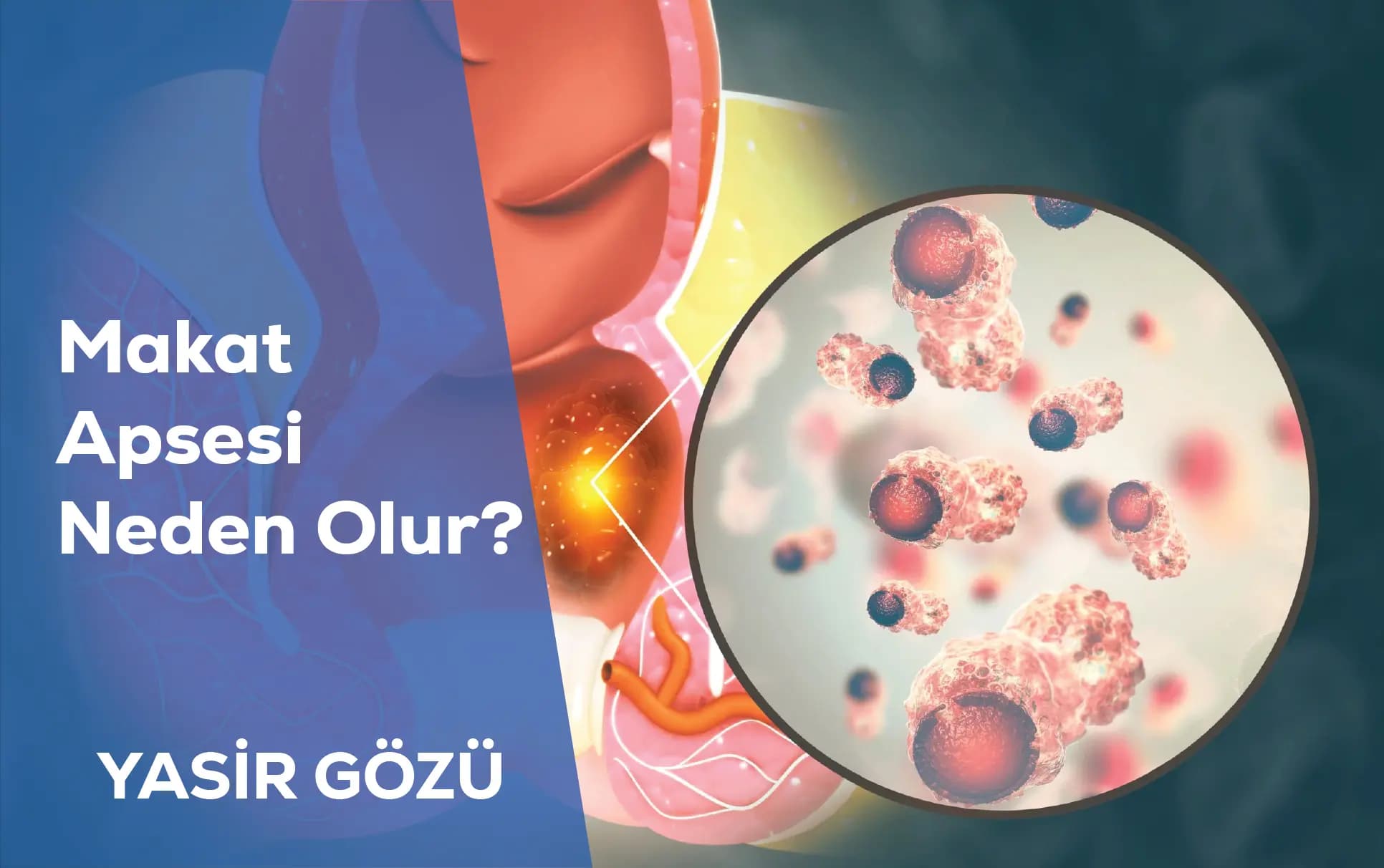
The vast majority of perianal abscesses originate from blockage of the secretory glands in the anal canal (the cryptoglandular mechanism); it has nothing to do with poor hygiene, and most of the time there is no preventable cause at all. What makes the terrain more susceptible: bouts of diarrhea, straining with constipation, Crohn's disease, diabetes, immunosuppressive conditions and medications, and smoking. Rare sources: a fissure base, post-surgery or trauma, and skin-based infections (HS, pilonidal sinus). A recurring abscess, meanwhile, is almost always the sign of a fistula.
After abscess drainage, the question patients ask most often is not medical but moral: "Why did this happen to me? When I'm so careful about my hygiene?" My answer to that question is also the summary of this article: a perianal abscess does not come from uncleanliness; it comes from an unlucky blockage in your body's own anatomy; small glands that everyone has. Now let us unpack the mechanism and the predisposing factors one by one.
The main mechanism: The glands' revolt
Along a toothed line in the middle of the anal canal sit 6-10 small secretory glands; their job is to produce secretions that lubricate defecation. The ducts of these glands are hair-thin and prone to blockage: thickened secretions, a fragment of stool, or a period of swelling can seal a gland's opening. In the blocked gland, secretions accumulate, bacteria multiply, and the infection (finding no way out) carves a pocket into the surrounding tissue. Depending on which direction the pocket opens, the abscess sits superficially or deep (this is the anatomical reason behind the "invisible abscess" picture in the symptoms article). In medicine this mechanism is called a cryptoglandular abscess, and it is by far the leading cause of all perianal abscesses.
The predisposing factors: Who gets them more easily?
Bowel irregularities: bouts of diarrhea (liquid stool slips into gland openings more easily) and forceful straining with constipation are the two ends of gland trauma. Diabetes: high blood sugar both lowers resistance to infection and lets the inflammation grow quickly; in a diabetic patient an abscess is more frequent, louder, and more urgent. Immunosuppression: cortisone and similar drugs, chemotherapy, certain rheumatologic medications, HIV; all of these can turn a gland's small infection into a large abscess. Crohn's disease: inflammatory bowel disease markedly increases the tendency to abscesses and fistulas around the anus; recurring abscesses at a young age plus a history of diarrhea and abdominal pain call for Crohn's screening. Smoking: impairs tissue blood supply, worsening both the abscess-prone terrain and the quality of healing. Male sex and ages 20-50: statistics' favorite group; the reason is not fully understood.
Non-glandular sources: A minority, but important
A small share of abscesses arise outside the gland mechanism, and the distinction affects treatment. Skin-based sources: infected hair follicles, hidradenitis suppurativa (its perianal involvement is mistaken for an abscess), and an abscessed pilonidal sinus; their locations are typically away from the canal. A fissure base: infection developing from the floor of a chronic anal fissure. After trauma or procedures: rare abscesses following surgery or injections in the area. Whatever the source, the cardinal rule does not change: accumulated pus must be drained.
The recurring abscess: The scenario with the real message
"I've had an abscess three times in two years, drained all three times"; the diagnosis in this story is practically ready-made: a fistula. A recurring abscess in the same area is a hidden tunnel left over from the first abscess, filling up and overflowing from time to time; each drainage saves the day but does not dry out the tunnel. The solution is to map the tunnel during a calm interval and proceed to fistula treatment. Telling a patient with recurring abscesses "again? bad luck" is the disease's most classic form of neglect.
Can it be prevented? The honest answer
The main mechanism (gland blockage) is largely a matter of chance. I cannot tell anyone "if you had done X, it wouldn't have happened." But shrinking the predisposing terrain is in our hands: maintaining bowel regularity (fiber and water; steering clear of both diarrhea and constipation), keeping blood sugar under control, quitting smoking, and never giving up the search for a fistula when abscesses recur. And the do-nots: harsh interventions in the area (aggressive cleaning, squeezing, picking) irritate the gland openings, while unnecessary "preventive" antibiotic courses prevent no abscess and only feed resistance.
Frequently asked questions
Could I have caught it from my spouse or from a toilet?
No; an abscess is not contagious; its source is your own glands. A shared toilet, towels, intimacy... none of these cause an abscess.
Does spicy food cause abscesses?
Not directly. Spice can contribute indirectly at most by triggering a bout of diarrhea; the real determinant is your bowel regularity.
Why is long sitting blamed?
The direct, proven link between long sitting and abscesses is weak; it is a more meaningful risk for pilonidal sinus and hemorrhoids. Even so, taking breaks is a good habit in any case for the area's circulation.
I have had one abscess; will it come back?
A single abscess that has closed without a trace usually does not recur. The scenario that carries a recurrence risk is the abscess that has formed a fistula; which is why follow-up after drainage (whether the discharge has stopped) is critical. Details are in the guide article.
Sources
- American Society of Colon and Rectal Surgeons (ASCRS) — Clinical Practice Guideline for Anorectal Abscess, fascrs.org
- Turkish Society of Colon and Rectal Surgery, tkrcd.org.tr
Let us map out your recurring abscess; the cause is most likely a hidden tunnel: +90 552 608 39 21, Levent.
Yasir Gozu, MD
General Surgery Specialist
He has worked in anorectal diseases (proctology) for over twenty years, focusing on non-surgical laser treatments for hemorrhoids, anal fistula, anal fissure and pilonidal sinus. He sees patients at Avrupa Cerrahi in Besiktas Levent.
Content owner: Yasir Gozu, MD
Published: June 16, 2024
Last updated: September 9, 2026