This article is for information purposes only; it is not a substitute for an examination and a physician’s assessment.
What determines your recovery time is the name of the operation: with laser (FiLaC), most patients return to a desk job in 1-2 days; with fistulotomy, the open wound fills in over 4-8 weeks; a seton is a planned process spanning weeks to months; with LIFT, return to work usually takes 1-2 weeks. Mild soreness and slight discharge are normal in the first days; fever, worsening throbbing pain, and foul-smelling discharge, however, mean a call to your doctor.
"When will I heal?" — the question every patient deciding on surgery wonders about, often more than the surgery itself. The honest answer is not a single number but a table, because in fistula disease "surgery" is not the name of one single thing. Sealing the tract from the inside with a laser and laying it open with a scalpel to clean its bed are two different journeys through the same disease. Below I have written out both the realistic timelines method by method and what you will encounter week by week.
Recovery by method: at a glance
| Method | Hospital stay | Return to work (desk job) | Full recovery |
|---|---|---|---|
| Laser (FiLaC) | Same-day | 1-2 days | 2-4 weeks (no wound care) |
| Fistulotomy (open) | Same-day/1 night | 3-7 days | 4-8 weeks (until the open wound fills in) |
| LIFT | Same-day | ~1 week | 3-6 weeks |
| Seton | Same-day | 2-3 days | Depends on the plan: weeks to months |
These durations are averages; the depth of the fistula, its branching, and your own healing speed can stretch the table in either direction. Those doing heavy physical work should add a few extra days to every method compared with desk workers.
The first 48 hours: what is normal?
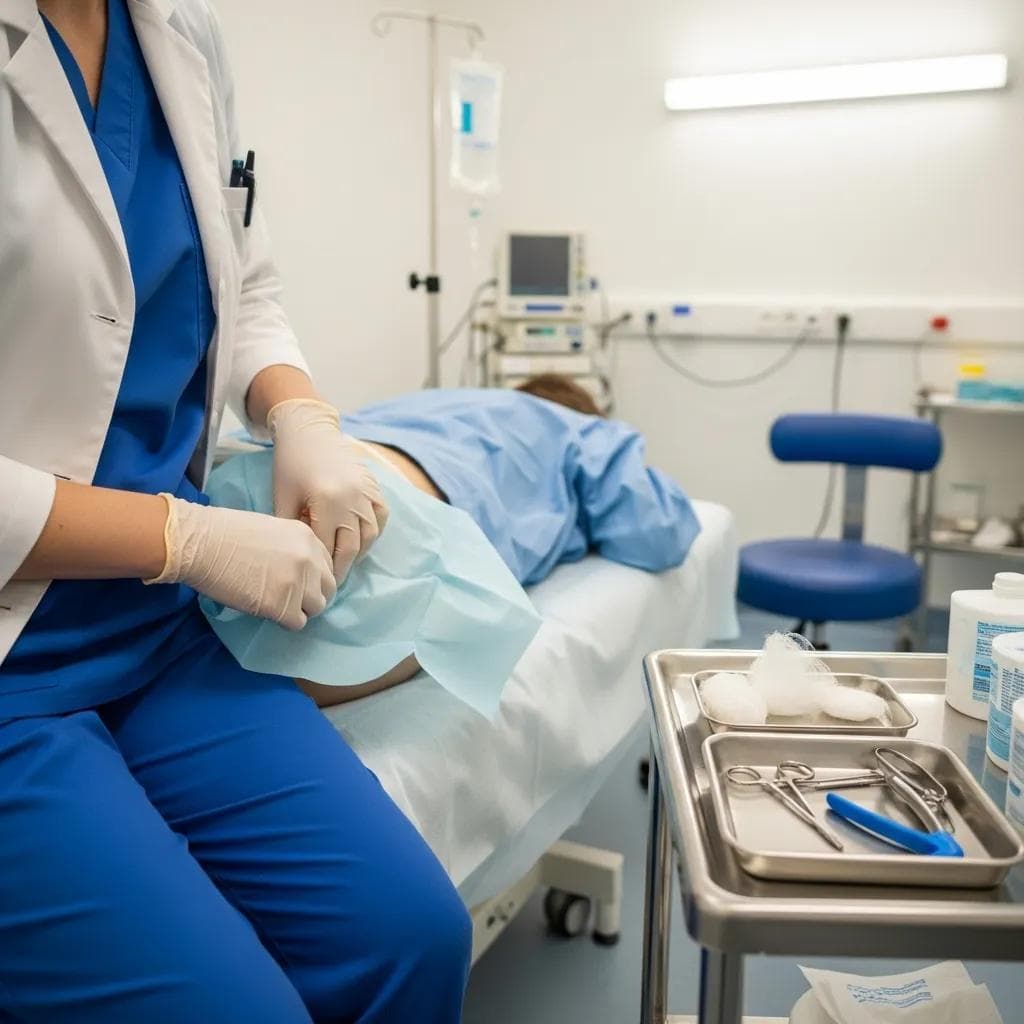
As the anesthesia wears off, mild grogginess, soreness in the area, a small amount of blood-tinged yellowish discharge on the pad, and burning during the first bowel movement — all of this is the expected picture. Laser patients usually describe this period as "soreness rather than pain"; in fistulotomy patients the pain is somewhat more pronounced and is managed with regular painkillers. Do not put off the first bowel movement out of fear; sitting on the toilet regularly from day one, supported by a stool-softener routine, is the best pain management there is.
The first week: establishing the routine
Set up a simple three-legged routine: sitz baths (2-3 times a day plus after bowel movements), soft stools (fiber + 2 liters of water + a softener if needed), and gentle dryness (clean with water, pat dry, cotton pad). Showering is allowed from the next day; long soaks in the tub and pools or the sea should wait during this period. Desk workers return to work at the start of this week after laser, and usually by the end of it after fistulotomy. Driving is fine once your pain has subsided and your reflexes are comfortable — for most patients from day 2-4 onward.
Weeks 2-8: the wound's own calendar
With laser, an outside observer would not even see a mark; the internal sealing quietly completes over a few weeks. With fistulotomy, the open wound fills in from the inside out — that is the design itself, not a cause for concern. A small amount of ongoing discharge is normal during this period; before panicking that the wound "still hasn't closed," remember your calendar: 4-8 weeks. Returning to the gym: walking is fine from the first days; weights and movements that raise abdominal pressure after ~2 weeks with laser, 4-6 weeks with open surgery. Sexual activity is fine from whenever your pain allows — for most patients, 1-2 weeks.
Warning signs: these are not normal
If you have any of these four, do not say "it will pass" — call: fever above 38°C (100.4°F); throbbing pain that increases day by day (when it should be decreasing); the appearance or worsening of foul-smelling, purulent discharge; inability to urinate. These can be signs of infection or early recurrence, and with early intervention they stay small. This is why you should not skip your follow-up appointments — as I emphasized in the article where I discuss the risks: recovery is earned at home but secured through follow-up.
Three habits that speed up healing
No magic, just discipline: zero tolerance for constipation (if the stool hardens, the whole calendar slips back), cutting down on smoking during this period — ideally quitting — (it directly affects tissue nutrition), and breaking up long periods of sitting. And one psychological note: the healing curve is not a straight line; a good day can be followed by a tough one. If the trend is downward (pain easing, discharge thinning out), you are on the right track.
Frequently asked questions
How do we know if there is a recurrence?
Discharge returning within months after complete closure, firmness in the same area, or that familiar ache suggests recurrence. A recurrence reported early is usually resolved with a minor procedure; I explained the follow-up plan here.
I have a seton; is it normal for it to take this long?
Yes — the seton is by design the "slow and safe" strategy: to protect the muscle, it closes the tract over months or prepares it for a second stage. The duration is the plan itself; your patience is your muscle's insurance.
Will I need to go in for dressing changes?
With laser, no — changing the pad is enough. With open surgery, simple wound care is needed in the first weeks; most patients manage this at home themselves or with a relative, and in complex cases we arrange short-term professional support.
What is the most common mistake during recovery?
Dropping the routine once you feel well. The baths, fiber, and water regimen should continue until the wound has closed — you stop when the calendar ends, not when the symptoms do.
Sources
- American Society of Colon and Rectal Surgeons (ASCRS) — Clinical Practice Guideline for Anorectal Abscess and Fistula, fascrs.org
- NHS — Anal Fistula patient information, nhs.uk
I can only draw up a timeline specific to you once I have seen your fistula; we will clarify this table together before the procedure. Levent: 444 8 623.
Content owner: Yasir Gozu, MD
Published: April 24, 2026
Last updated: July 8, 2026