This article is for information purposes only; it is not a substitute for an examination and a physician’s assessment.
The basis of an anal fistula diagnosis is a few-minute proctologic exam; most patients need no further testing. In branched, recurrent, or deep fistulas, the tunnel is mapped with MRI. An accurate diagnosis isn't just saying "there's a fistula" — it's determining the tunnel's relationship to the muscle, because that's what determines the treatment.
I know the tension of patients suspected of having a fistula as they sit down in the exam chair; most have been putting off this moment for days. So let me say it up front: the diagnostic process is the part where the dreaded portion is shortest. The real work happens after diagnosis, in choosing the right method.
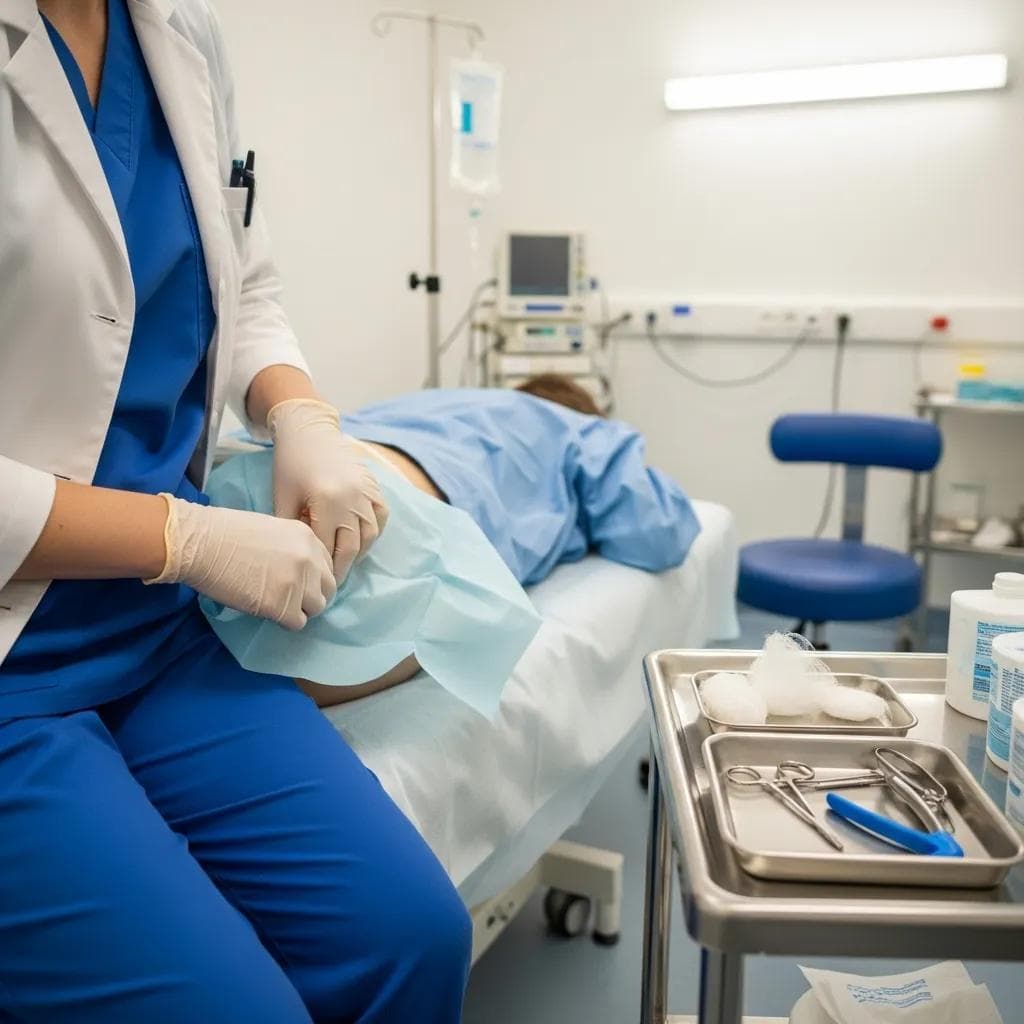
What happens during the exam?
First we talk — the color of the discharge, how long it's been going on, any abscess history, previous procedures. This few-minute conversation tells me more about the tunnel than you'd expect. Then a gentle exam: the skin-side opening is usually visible to the eye; the course of the tunnel can be felt as a cord-like structure under the skin by an experienced finger. If needed, we look for the internal opening inside the canal with a small instrument called an anoscope — a painless look that takes just a few seconds.
The question patients ask most: "Do I need to prepare?" No — no enema, no fasting. You come as you are.
When is MRI needed?
For a simple, single-tract, superficial fistula, the exam is usually enough. I request a pelvic MRI in three situations: if the fistula has been operated on before and recurred, if the exam raises suspicion of branching, or if the tunnel runs deep. MRI shows us the tunnel's relationship to the sphincter muscle ring, any side branches, and hidden pockets of inflammation — in other words, it leaves no surprises for the operating table. A small analogy: the exam sees the road, MRI draws the map.
Endoanal ultrasound is also a useful tool; in practice we use it less often than MRI because MRI is both more comfortable and provides more information in complex fistulas.
From diagnosis to treatment: how is the method chosen?
The real output of the diagnosis is this sentence: "Where does this tunnel pass through the muscle?" The path forward splits based on the answer. For superficial fistulas that barely involve the muscle, we usually finish the job in a single session with laser (FiLaC) or fistulotomy. For fistulas that pass deep through the muscle or branch out, muscle-sparing techniques come into play: LIFT, a loose seton, or an advancement flap. I've covered these options one by one in the treatment page and the stages guide.
Let me correct one misconception: there's no step where "let's try a cream first, and if that doesn't work, surgery." With fistulas, medication and creams aren't a treatment step — at best they calm a flare-up.
Why is follow-up part of the treatment?
A fistula is a condition that can recur; that's why we don't leave you after the procedure. Early follow-ups monitor wound healing, and later months watch for signs of recurrence. Take these three seriously during follow-up and report them without delay: discharge starting again, hardness or swelling in the same area, and that familiar ache that comes with sitting. Recurrence caught early is often resolved with a minor procedure.
Frequently asked questions
Is the exam painful?
No — it's a gentle look that takes a few minutes. If there's a very painful condition like an active abscess, we adjust the exam accordingly and, if needed, perform the assessment under anesthesia.
Is a colonoscopy needed for diagnosis?
Not for the fistula itself. It's arranged separately if there's suspicion of Crohn's disease, bleeding, or other bowel symptoms.
Can surgery happen without an MRI?
Yes, for a simple fistula — the exam is enough. If there's suspicion of recurrence, branching, or a deep course, you shouldn't go to the table without an MRI; operating without a map invites recurrence.
The diagnosis is made — how long can I delay the procedure?
A fistula isn't an emergency, but it is progressive — it can branch out the longer you wait. A quiet period is the best time for the procedure; I covered the cost of delaying here.
Sources
- American Society of Colon and Rectal Surgeons (ASCRS) — Anorectal Abscess and Fistula Clinical Practice Guidelines, fascrs.org
- NHS — Anal Fistula patient information, nhs.uk
Diagnosis starts with the right questions; we look forward to seeing you for an exam at our Levent clinic: 444 8 623.
Content owner: Yasir Gozu, MD
Published: April 7, 2026
Last updated: July 8, 2026