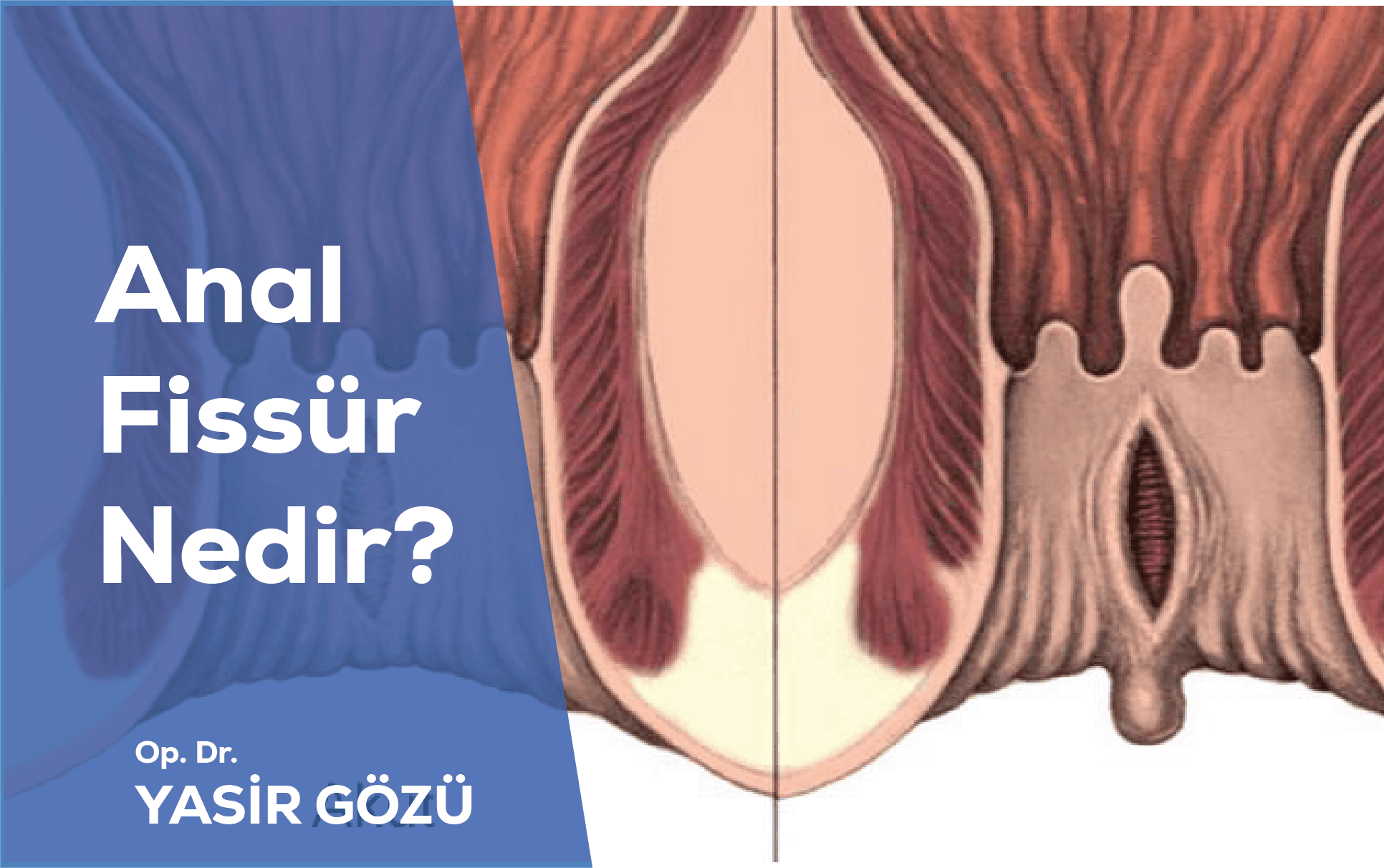
The medical information in this article was written by Yasir Gozu, MD (General Surgery Specialist) and checked against current medical sources.
This article is for information purposes only; it is not a substitute for an examination and a physician’s assessment.
Rectal prolapse is most common in older women who have had multiple births: and the most frequent mistake in this age group is leaving it untreated on the assumption that "surgery is no longer an option." In fact, the options have multiplied precisely for this group: laparoscopic (keyhole) rectopexy for patients in suitable general condition, and perineal repair through the anus (which can be done even under regional anesthesia) for those who cannot tolerate major surgery. Untreated prolapse, meanwhile, worsens incontinence, causes sores and bleeding, and increases frailty, chipping away at quality of life a little more each year.
The saddest part of this disease is not the disease itself but the false sentence built around it: "Am I really going to have surgery at my age?" I see patients who get by on that sentence for years, become housebound with pads, and give up going to their grandchild's wedding. Then (usually at a relative's insistence) they come in, the right method is chosen, and the sentence I hear most often is this: "If I had known it would be this easy, I would have done it years ago." This article exists to move that sentence forward.
Why in older age, and why in women?
The rectum's suspension system carries a load for a lifetime; three factors wear it down. Childbirth: every vaginal delivery (especially difficult ones, large babies, or assisted deliveries) leaves its mark on the pelvic floor muscles and nerves; the bill often comes due decades later. Menopause: as estrogen withdraws, connective tissue loosens. Chronic straining: constipation, which increases with age, is an extra load hung on the suspension every day. When the three stack up, the bowel slides like a telescope (the full picture is in the guide article). It is rarer in men; when it occurs, the prostate-straining relationship and the pelvic floor are evaluated separately.
The real cost of leaving it untreated
Let me spell out the bill for the "I'm managing" strategy: the prolapsed tissue lengthens a little more each month and becomes harder to push back in; because the muscle ring is constantly stretched, incontinence worsens year by year (and long-standing incontinence has a lower chance of improving after surgery); the exposed tissue becomes irritated, bleeds, and ulcerates; and the most insidious cost; social withdrawal: dependence on pads, fear of odor, staying at home. There is also an emergency scenario: the tissue getting trapped outside and turning purple (strangulation); which turns what had been an "elective" operation into an emergency one. In short: in this disease, the decision to wait is also a decision, and it has a price.
Option 1: The abdominal route, laparoscopic rectopexy
For patients in suitable general condition, this is the gold standard: the abdomen is entered (nowadays mostly laparoscopically; through a few small holes), the bowel is pulled up and fixed to the pelvic bone. The advantage is clear: it is the method with the lowest recurrence rate and provides the best recovery of continence and evacuation function. Against the fear of "abdominal surgery at an advanced age," the reality is this: keyhole surgery carries a far lighter burden than open surgery and is performed safely in patients in their 70s and 80s whose cardiac and pulmonary evaluation is favorable. The decision is made not by age but by physiology; calendar age and body age are not the same thing.
Option 2: The anal route, perineal repair
For patients in whom abdominal surgery is considered risky (severe heart-lung disease, a history of multiple operations, frailty), this is the elegant solution: everything is done through the anus; the prolapsed segment is either plicated and suspended (Delorme type) or removed and reconnected (Altemeier type). It has two great advantages: the abdomen is not opened, and it can be done even under regional (spinal) anesthesia: meaning most patients told they "can't tolerate anesthesia" are actually candidates for this method. The honest disadvantage: the likelihood of recurrence is somewhat higher than with the abdominal route. Still, the rule is this: a comfortable operation that carries some risk of recurrence is better than a perfect operation that never happens.
Non-surgical supports: With their limits
In patients who decline or are waiting for surgery, three things are still done: constipation management (fiber, water and a stool softener; reducing straining slows the progression of the prolapse), pelvic floor exercises (they do not reverse the prolapse but contribute to continence control), and skin care (managing irritation with barrier creams). These are a bridge, not a treatment; and it should be said honestly: for full-thickness prolapse, the address of a lasting solution is the operating room.
After surgery: A realistic timeline
With perineal repair, the hospital stay is usually short (1-3 days) and the pain burden is low; with laparoscopic rectopexy it is 2-4 days, and early walking is essential. The shared rule in the first weeks is to avoid constipation; what threatens the repair most is, once again, straining. Incontinence improves gradually over months; pelvic floor exercises are at their most productive during this period. And follow-up: an annual check-up catches the rare recurrence while it is still small.
Frequently asked questions
I am 85; can I really have surgery?
If the examination and anesthesia assessment are favorable, yes; perineal repair was developed precisely for this age group. The decision is made by looking at the heart-lung report, not the birth certificate.
I don't want surgery; can't I hold the prolapsed area in with tape or a girdle?
External supports cannot prevent the prolapse and they irritate the skin. Gently reducing it and keeping the area dry is best; but knowing that this is coping, not a solution.
If it recurs, is a second operation possible?
Yes; recurrent prolapse can be repaired again; usually the other route is chosen depending on the type of the first operation. It is a rare scenario, but not a dead end.
Will my incontinence improve without surgery?
Not while the prolapse remains in place; the result cannot improve until the cause is removed. Once the prolapse is repaired, a meaningful portion of the incontinence recovers over time.
Sources
- American Society of Colon and Rectal Surgeons (ASCRS) — Clinical Practice Guidelines for Rectal Prolapse, fascrs.org
- NHS — Rectal prolapse, Rectal prolapse and perineal repair
Before saying "I can't tolerate it," let's do an assessment; you have more options than you think: +90 552 608 39 21, Levent.
Yasir Gozu, MD
General Surgery Specialist
He has worked in anorectal diseases (proctology) for over twenty years, focusing on non-surgical laser treatments for hemorrhoids, anal fistula, anal fissure and pilonidal sinus. He sees patients at Avrupa Cerrahi in Besiktas Levent.
Content owner: Yasir Gozu, MD
Published: August 28, 2024
Last updated: September 9, 2026