The medical information in this article was written by Yasir Gozu, MD (General Surgery Specialist) and checked against current medical sources.
This article is for information purposes only; it is not a substitute for an examination and a physician’s assessment.
The location of blood in stool is the strongest clue to its source: a bright streak or spot on the surface of the stool = a source close to the exit (fissure, hemorrhoids; the most common, and usually harmless); dark blood mixed throughout the stool = a source higher up in the bowel (polyp, inflammation; warrants investigation); black, tarry stool = the upper digestive tract (needs urgent evaluation). Invisible (occult) blood is picked up by a test and is the classic explanation for unexplained anemia. Whatever the location: blood in stool seen for the first time should always be clarified with an examination.
"I saw blood in my stool" is a sentence that, in my clinic, can be the doorway to two very different conditions: one a fissure diagnosed in three minutes, the other a polyp that needs a colonoscopy. The first question that separates the two is always the same, and it's the thread running through this article: where on the stool was the blood? Looking into the toilet bowl is nobody's idea of fun; but that one glance is the most valuable piece of information you can give your doctor.
Pattern one: On the surface of the stool, on the paper, in the bowl
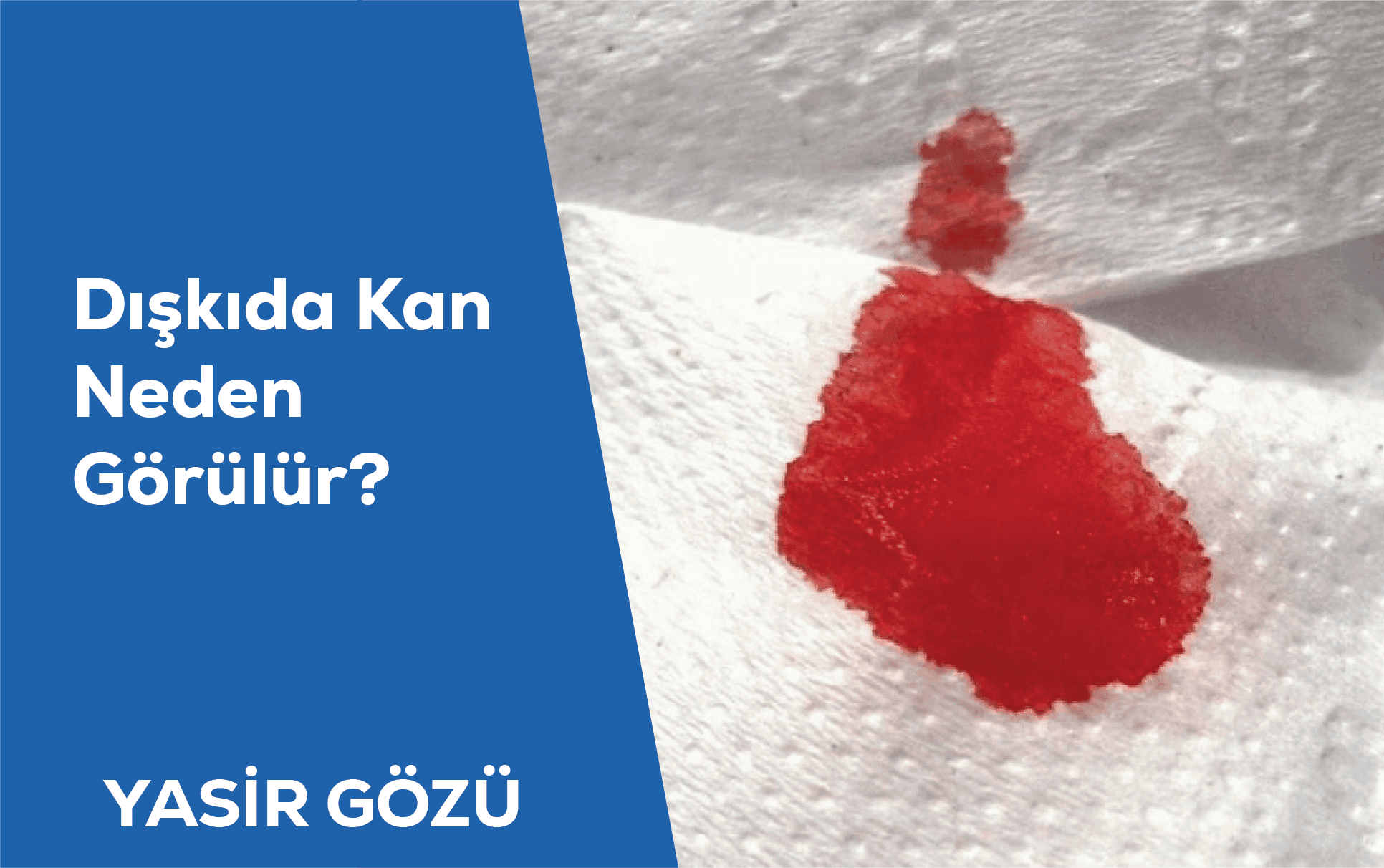
If blood forms a thin streak on the surface of the stool, leaves a mark on the paper, or drips into the bowl after passing stool, the source is most likely in the last few centimeters; the already-formed stool picked up the blood as it passed through that area. The two classic causes of this pattern: fissure (accompanied by sharp pain during bowel movements; symptoms) and hemorrhoids (painless dripping; symptoms). This group is by far the most common and most benign scenario for blood in stool; but "most common and benign" doesn't mean "safe to ignore"; get it confirmed once, the first time you notice it.
Pattern two: Mixed into the stool
If the blood is inside the stool, mixed throughout it (dark red or maroon spots, a marbled pattern) the message is different: the blood mixed in while the stool was still being formed higher up, so the source is above the anal canal. Candidates include: polyps (bleed insidiously and intermittently), inflammatory bowel disease (with the classic trio of diarrhea, mucus, and abdominal pain), diverticula, and tumors, which must be ruled out. This pattern calls for planned investigation (often a colonoscopy) regardless of age. No panic, but no delay either: the full breakdown of this distinction is in the color guide.
Pattern three: Black, tarry stool
Sticky, tarry, shiny-black, strong-smelling stool (melena) is a sign of digested blood; the source is at the level of the stomach or duodenum, and this picture calls for same-day evaluation, especially in people taking painkillers/anti-inflammatory drugs or with stomach complaints. Look-alike traps: iron supplements turn stool a matte black (not sticky and foul-smelling like melena), and beetroot turns it red. A quick review of medications and diet is the first checkpoint; when in doubt, a test settles it.
Pattern four: Blood you never see
The sneakiest scenario is bleeding that continues even though you see nothing in the bowl: microscopic seepage. It reveals itself in two ways: a positive screening fecal occult blood test, or unexplained iron-deficiency anemia (fatigue, paleness, tiring easily). The standard response to both is the same: imaging of the bowel. The phrase "I don't see anything, so there's no problem" doesn't hold in this pattern; that's exactly why screening tests exist.
Location, age and accompanying signs: The three-part decision
Here's a practical framework: a young patient and blood on the surface and the typical pain/dripping pattern = fissure or hemorrhoids are most likely; an examination is enough, and a colonoscopy usually isn't needed. Age over 45 and any pattern = a one-time lower-bowel imaging study should be on the table. Any age and blood mixed in / weight loss / a change in bowel habits / anemia / family history = a colonoscopy is clearly indicated. Let this framework guide your decision, but leave the final word to the examination: patterns can overlap, and two sources can coexist; a patient with hemorrhoids can also have a polyp.
Frequently asked questions
I only saw blood once and it never happened again; should I just forget about it?
Don't forget it; make a note, and if it was the first time, get it examined once. Intermittent bleeding is the natural pattern of many sources, including polyps; the reassurance of "it hasn't happened again" can be misleading.
I saw blood while I had diarrhea; can diarrhea cause bleeding?
Severe diarrhea can irritate the anal canal and cause superficial bleeding, but the trio of diarrhea, blood and mucus is also the classic picture of inflammatory bowel disease. If it recurs, it should definitely be evaluated.
Occult blood tests are sold at pharmacies; is doing it myself enough?
The test is a screening tool, not a diagnostic one: a negative result doesn't rule out bleeding, and a positive one doesn't tell you the source. Whatever the result, interpreting it and following up is a doctor's job; a self-administered test is no substitute for an examination.
There's a streak of blood in my baby's stool; do the same rules apply?
In infants and children, the most common cause is benign (fissure, cow's milk protein sensitivity), but the evaluation should always be done by a pediatrician. Blood in a child's stool should be seen by a doctor once, rather than dismissed with "let's just watch it."
Sources
- American Society of Colon and Rectal Surgeons (ASCRS), fascrs.org
- NHS — Blood in poo, nhs.uk
Describe the pattern you've seen and let's pin down the source together: 444 8 623 — Levent. For a roadmap to resolving it, see the article on how it resolves.
Yasir Gozu, MD
General Surgery Specialist
He has worked in anorectal diseases (proctology) for over twenty years, focusing on non-surgical laser treatments for hemorrhoids, anal fistula, anal fissure and pilonidal sinus. He sees patients at Avrupa Cerrahi in Besiktas Levent.
Content owner: Yasir Gozu, MD
Published: August 23, 2024
Last updated: September 7, 2026