
The medical information in this article was written by Yasir Gozu, MD (General Surgery Specialist) and checked against current medical sources.
This article is for information purposes only; it is not a substitute for an examination and a physician’s assessment.
Pilonidal Sinus Laser Treatment: Symptoms, Causes, and the Recovery Process
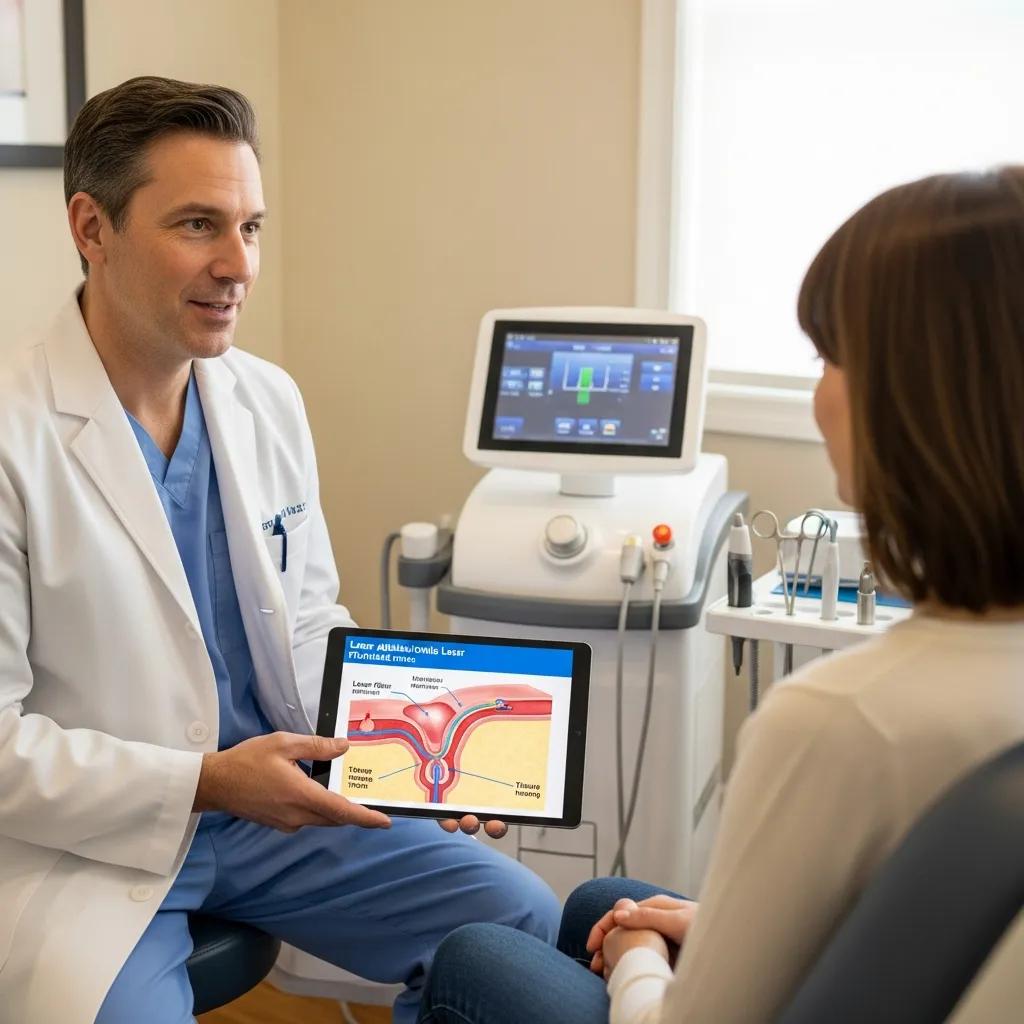
A pilonidal sinus is a cystic cavity that forms at the tailbone and is most often associated with ingrown hairs. For this condition, which can cause both discomfort in daily life and aesthetic concerns, we summarize here the symptoms, causes, and recovery process of laser treatment in a clear and accessible way. This guide covers, step by step, the definition of pilonidal sinus, its common symptoms, the advantages of laser treatment, and what to watch for after treatment.
For a deeper look at each stage, see our detailed guides: what a pilonidal sinus is, its symptoms, what causes it, how laser treatment works, the recovery timeline, and choosing a clinic in Istanbul.
What Is a Pilonidal Sinus? What Symptoms Does It Present With?
A pilonidal sinus is a cyst that develops at the tailbone when hair follicles penetrate under the skin and cause inflammation. It is most commonly seen in late adolescence and young adulthood, particularly in men. Problems such as pain that worsens with sitting, local infections, and, if left untreated, progression to a chronic condition may occur.
What Is a Pilonidal Sinus (Ingrown Hair Cyst)?
It is a process that begins when a hair becomes embedded in or is pushed into the skin; inflammation and cyst formation may then develop. Early intervention reduces the risk of infection and the likelihood of recurrence.
Signs and Symptoms

Common complaints include pain, tenderness, swelling, and redness at the tailbone. Pain may increase when sitting or moving; in some cases, discharge from the cyst and an unpleasant odor may also be observed. When these findings appear, prompt evaluation is beneficial.
Who Is Most Commonly Affected?
Pilonidal sinus is most frequently seen in young adults aged 15–30 and is more common in men. Factors such as obesity, jobs that require prolonged sitting, dense body hair, and inadequate local hygiene increase the risk.
Why Are Pain, Swelling, and Discharge Important?
Pain, swelling, and discharge at the tailbone can be signs of infection. Seeing a specialist as soon as these symptoms are noticed helps prevent the infection from progressing and complications from developing. For more detailed information, you can visit our tailbone pain page.
What Causes a Pilonidal Sinus? Ingrown Hairs and Other Risk Factors
The most common cause behind pilonidal sinus is ingrown hair; in addition, factors such as prolonged sitting, local trauma, heavy sweating, and inadequate hygiene increase the risk.
The origin of the disease has long been debated in the literature; while some cases show a congenital predisposition, acquired mechanisms are predominant in most cases.
Causes of Pilonidal Sinus: Acquired or Congenital?
The macroscopic and microscopic pathological findings of 354 patients support an acquired origin of pilonidal sinus in most cases. The source of the debate is that the disease can arise in two distinct types through different mechanisms.
The etiology of pilonidal sinus, 1962
Ingrown Hairs and Other Risk Factors
Ingrown hair occurs when hairs breach the skin barrier and enter the dermis, triggering an inflammatory reaction, and it plays a central role in the formation of pilonidal sinus. Prolonged sitting, excess weight, dense body hair, and local trauma are other important risk factors.
How Do Ingrown Hairs Contribute to Pilonidal Sinus Formation?
Once a hair penetrates beneath the skin, a foreign-body reaction and secondary bacterial colonization can develop; as a result, a cyst and chronic sinus tracts form. Early intervention reduces progression and complications.
What Are the Other Infection and Risk Factors?
Inadequate local hygiene, frequent friction, minor skin injuries, and heavy sweating increase the risk of infection. In addition, certain systemic conditions or immune suppression can make healing more difficult.
How Is Pilonidal Sinus Laser Treatment Performed and What Advantages Does It Offer?
Laser treatment for pilonidal sinus is a minimally invasive approach that aims to clean the sinus cavity and close the sinus tract by ablation. It is usually performed on an outpatient basis; a quick return to work and low morbidity are among its standout features.
The Procedure
The procedure is mostly performed under local anesthesia. Laser energy targets the inflamed tissue and hair roots within the sinus cavity; this reduces bleeding, speeds up wound healing, and in most cases eliminates the need for a hospital stay.
Advantages

The main benefits of laser treatment include less postoperative pain, faster healing, a lower risk of infection, and minimal scarring. In properly selected patients, clinical studies show that laser ablation is a safe and effective option.
Pilonidal Sinus Laser Treatment: Benefits and Healing
The ease of application, no need for hospitalization, minimal postoperative care requirements, and the ability to return quickly to daily life make laser treatment a safe and effective option for those with recurrent pilonidal disease; these results are supported by low morbidity.
Evaluation of laser ablation for recurrent pilonidal sinus disease: treatment success, recurrence rates, and patient outcomes, AC Emral, 2025
Key Advantages of Laser Treatment
Because laser is less invasive than traditional surgery, it improves patient comfort, shortens the recovery period, and accelerates the return to work and daily life. When patients are appropriately selected, recurrence rates and complications remain low.
Differences Between Pilonidal Cyst Surgery and Laser Treatment
Conventional surgery and laser treatment differ in technique, recovery time, pain level, and complication profile. Which method is preferred depends on the patient's condition, the extent of the sinus, and the surgeon's experience.
Disadvantages and Risks of Conventional Surgery
Conventional surgery usually requires wider tissue excision; as a result, healing takes longer, pain may be greater, and more time may need to be devoted to wound care. The risk of infection and recurrence varies with the surgical technique.
Advantages of Laser Treatment Over Surgery
Laser ablation causes minimal tissue damage and reduces postoperative discomfort and the risk of infection; most patients can return to their normal activities within a short time. The literature shows that in appropriately selected cases, laser lowers morbidity and increases patient satisfaction.
Reviews and comparative studies have reported that laser ablation offers fewer complications and a shorter recovery period compared with traditional methods.
Laser Ablation: Effectiveness and Healing
In pilonidal sinus disease, laser ablation is a minimally invasive technique notable for good treatment effectiveness, low postoperative morbidity, and short recovery times. A review of the literature has shown that laser procedures demonstrate lower morbidity and postoperative complication rates, higher patient satisfaction, and potentially lower overall costs with minimally invasive techniques.
Laser ablation: a unique and beneficial therapeutic option for pilonidal sinus? And the potential for further innovation—a review, R Ganduboina, 2023
Recovery After Laser Treatment and Postoperative Care
Recovery after laser treatment varies from person to person; however, following your physician's care instructions speeds up healing and reduces the risk of recurrence. Frequently asked questions and recommendations are provided below.
How Long Does Recovery Take?
In general, noticeable improvement is seen within 1–2 weeks; full tissue repair and complete healing may take longer. During this period, it is important to rest, keep the area clean, and follow the dressing protocol recommended by your physician.
What Should You Pay Attention to in Home Care?
In home care, it is essential to maintain good hygiene, apply the recommended dressings regularly, avoid heavy physical activity, and contact your physician if symptoms worsen. Use the pain relievers prescribed by your physician and, if needed, antibiotics as directed.
Pilonidal Sinus Laser Treatment in Istanbul: Choosing a Clinic and Comparing Prices
Choosing the right clinic in Istanbul is an important step that affects treatment success and satisfaction. When selecting a clinic and comparing prices, it is helpful to keep some basic criteria in mind.
Choosing a Clinic
When choosing a clinic, the specialist's experience, the clinic's hygiene and patient safety standards, the currency of the technology used, and the patient assessment processes should be priorities. Patient reviews and references will also help you decide.
Price Comparisons
Treatment costs vary depending on the clinic, the technology used, and the protocol applied. Gathering information from different centers and making a thorough comparison will help you make the right choice.
Factors That Affect the Price
The clinic's experience, the physician's level of expertise, the type of laser used in the procedure, and the postoperative care protocol to be followed are the main factors that affect prices.
Pilonidal Sinus Laser Treatment Prices and Comparison Criteria
Laser treatment prices vary depending on the physician's experience, the clinic's location, the laser device used, and the services included in the treatment package. For exact price information, contacting your preferred clinics directly is the most reliable approach.
Frequently Asked Questions
Is Pilonidal Sinus Laser Treatment a Non-Surgical Method?
Yes. Laser treatment is generally a minimally invasive method and, in most cases, does not require wide surgical excision. The procedure is performed on an outpatient basis under local anesthesia; however, suitability for each patient depends on the physician's evaluation.
What Are the Recurrence Rate and Long-Term Results After Laser Treatment?
Recurrence rates are generally low with appropriate patient selection and good postoperative care. Long-term success may vary depending on the patient's adherence to follow-up and care recommendations and lifestyle changes. For more information, you can visit our what to do at home for pilonidal sinus page.
Who is a good candidate for pilonidal sinus laser treatment?
Laser treatment is mostly considered an effective option for young adults aged 15–30; however, suitability is determined by factors such as the patient's overall health and the size and extent of the sinus. The most appropriate treatment option is determined after a specialist's evaluation.
What should be considered during recovery after laser treatment?
Hygiene is the priority during recovery. Keeping the area clean, applying the recommended dressings regularly, and avoiding heavy physical activity are important. Contact your physician if symptoms worsen. Taking the medications recommended by your physician regularly supports healing; rest and stress reduction are also beneficial.
What are the side effects of pilonidal sinus laser treatment?
Laser treatment is generally safe; mild pain, swelling, or redness related to the procedure are among the common temporary effects. In rare cases, complications such as infection or bleeding may occur. It is therefore important to monitor symptoms after treatment and to consult your physician if anything unusual occurs. Your specialist will inform you about possible side effects.
What are the recurrence rates after pilonidal sinus laser treatment?
Recurrence rates are generally low with appropriate patient selection and good postoperative care. Clinical studies demonstrate the potential of laser treatment to reduce recurrence, but the patient's adherence to post-treatment care instructions and regular follow-up visits is important for long-term success.
What are the advantages of laser in pilonidal sinus treatment?
The advantages of laser treatment include being minimally invasive, less postoperative pain, faster healing, and a lower risk of infection. Since the procedure is mostly performed on an outpatient basis, the need for hospitalization is reduced and the return to daily life is faster.
How long does pilonidal sinus laser treatment take?
Laser treatment usually takes between 30 minutes and 1 hour. Because the procedure is performed under local anesthesia, most patients feel no pain during the procedure. The duration of treatment may vary depending on the size and complexity of the sinus; consult your physician for precise information.